
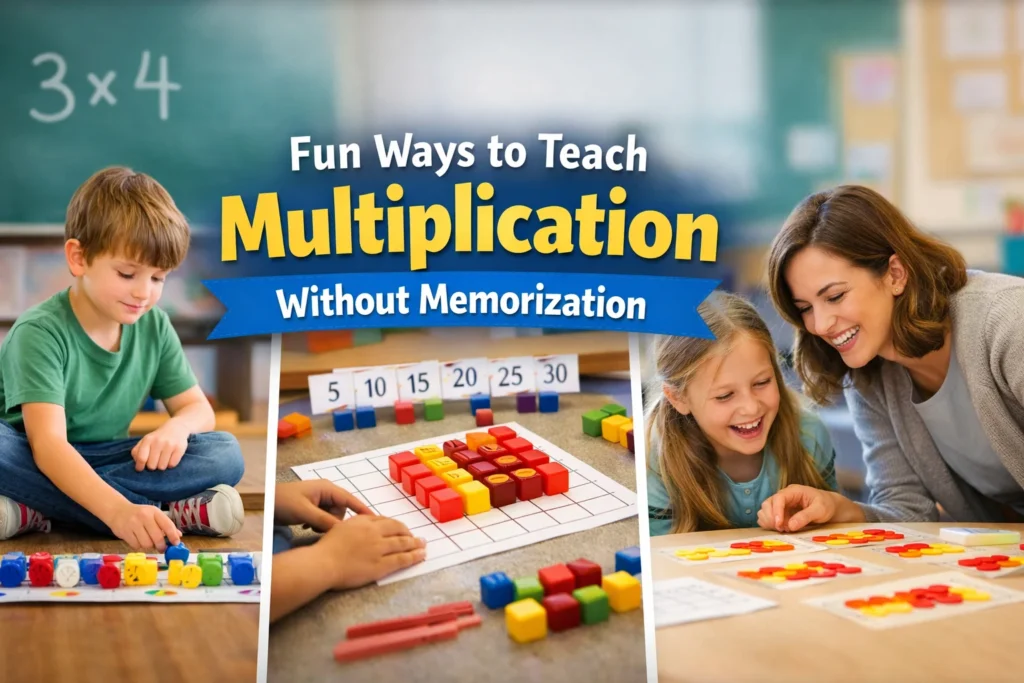
Memorization alone doesn’t build understanding. Teaching multiplication conceptually helps children see why multiplication works before asking them to remember facts.
I’ve watched students recite tables perfectly, then freeze on simple problems.
They “knew” the facts, yet couldn’t use them.
That’s the hidden flaw of multiplication without rote learning done the wrong way.
Memory without meaning doesn’t last.
When I started helping students teach multiplication without memorizing, something shifted.
The pressure dropped.
The thinking showed up.
Kids stopped guessing.
They started explaining.
That’s when learning sticks.
What Comes Before Memorizing Times Tables?
Before any table practice, children need meaning.
Real meaning.
That always begins with understanding multiplication concepts, not symbols.
Here’s what must come first:
- Equal groups so numbers feel real
- Repeated addition so multiplication has a reason
- Visual and concrete representations so ideas can be seen and touched
I’ve seen students grasp this in minutes once objects hit the table.
Blocks. Counters. Drawings.
Once the idea lands, tables stop feeling scary.
They start feeling logical.
Math Anxiety, Memorization, and Student Confidence
Rote memorization often creates math anxiety without anyone noticing.
Timed tests. Public mistakes. Silent shame.
I’ve sat with students who went quiet the moment numbers appeared.
Not because they were weak.
Because they were afraid to be wrong.
Teaching multiplication conceptually changes that emotional pattern.
When kids understand, mistakes feel safe.
Confidence grows naturally.
Learning math starts to feel possible again.
That’s how you begin reducing math anxiety.
That’s how students start learning math with confidence.
How Do Children Understand Multiplication Conceptually?
Children understand multiplication when they see it as groups, arrays, and patterns rather than symbols on a page. Meaning comes first. Symbols come later. When ideas feel real, answers stop feeling random.
I’ve watched this click happen.
A child lines up objects. Counts groups. Smiles.
That smile tells me the idea landed.
This is understanding multiplication concepts in action.
It’s calm. It’s clear. It lasts.
From Concrete to Abstract (How Learning Actually Happens)
Learning works in a clear order.
Hands first. Eyes next. Symbols last.
Kids need a path that goes:
- Concrete objects they can touch
- Pictorial drawings they can see
- Abstract numbers they can write
When this step is skipped, confusion follows.
I’ve seen students memorize facts yet feel lost because the meaning never formed.
Moving from concrete to abstract keeps thinking steady.
It’s how ideas stick.
Multiplication as Groups, Not Tables
Tables come later.
Groups come first.
When students work with equal groups, multiplication makes sense.
When they use repeated addition, the logic appears.
When they explore scaling ideas, numbers feel flexible, not fixed.
This is how kids start making sense of multiplication.
They explain answers instead of guessing.
That shift matters.
Fun Ways to Teach Multiplication Without Memorization
Fun multiplication learning happens through play, visuals, and hands-on activities, not drills. When learning feels active, students stay curious and focused.
I’ve noticed something consistent.
Kids don’t resist math.
They resist pressure.
These fun ways to teach multiplication without memorization lower the pressure and raise understanding.
Hands-On Multiplication Activities for Elementary Students
Hands-on work grounds ideas fast.`
It turns numbers into actions.
Simple tools work best:
- Counters, cubes, and beads
- Grouping real objects on a table
- Building sets students can rearrange
This kind of work builds meaning.
It supports learners who need time and space.
Visual Ways to Teach Multiplication
Visuals make structure visible.
They slow thinking down in a good way.
Strong visual tools include:
- Arrays that show rows and columns
- Area models that connect to space
- Number lines that show jumps and scale
I’ve seen visual learners relax the moment these appear.
They finally see what numbers are doing.
Teaching Multiplication Through Play
Play keeps minds open.
It keeps mistakes safe.
Effective play-based options:
- Math games with dice or cards
- Interactive activities at math centers
- Short classroom challenges that invite teamwork
This is learning through play at work.
It drives student engagement without pressure.
Fun Activities vs What They Teach
| Activity Type | Concept Built | Best For |
| Arrays | Structure | Visual learners |
| Games | Fluency | Engagement |
| Manipulatives | Meaning | Struggling learners |
Conceptual Multiplication Strategies Instead of Memorization
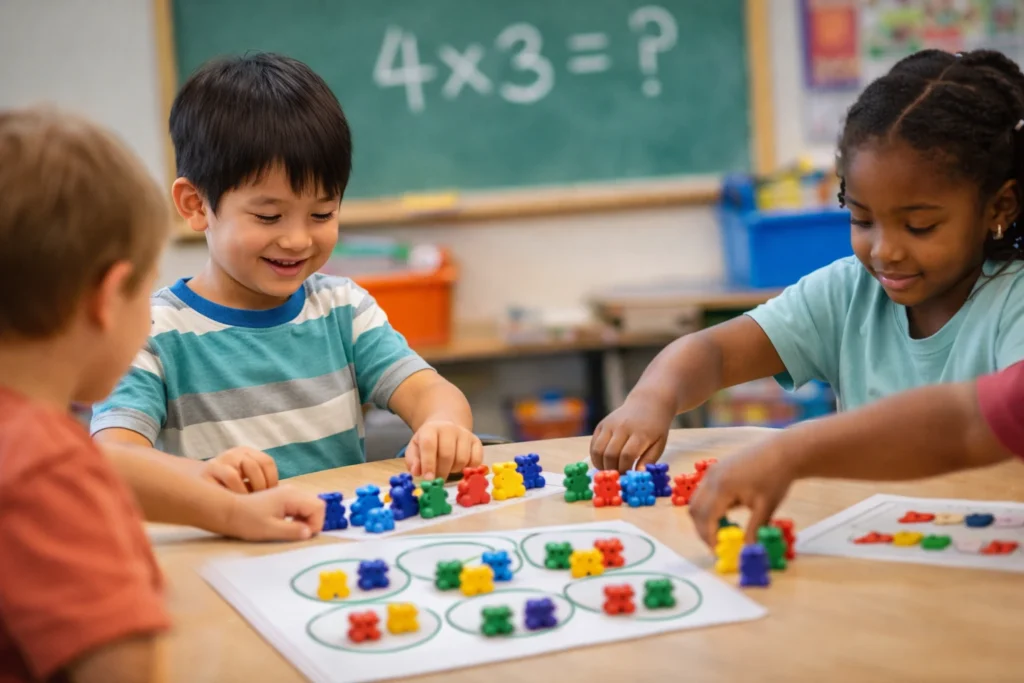
These strategies help students derive answers instead of memorizing them. When thinking replaces recall, mistakes drop and confidence grows.
I’ve seen this shift many times.
Students stop asking, “Is this right?”
They start saying, “Here’s why.”
That’s the power of conceptual multiplication strategies.
They turn guessing into reasoning.
Skip Counting (Pattern-Based Learning)
Skip counting builds rhythm and predictability.
It helps students notice patterns before facts.
Counting by 2s, 5s, or 10s on a number line makes multiplication feel familiar.
I’ve seen hesitant learners relax once counting feels like a song instead of a test.
This strategy works best early.
It lays groundwork without pressure.
Repeated Addition (Building Meaning)
Repeated addition explains where multiplication comes from.
It explains the “why” kids are always wondering about.”
When students see 4 + 4 + 4 instead of 3 × 4, the idea feels logical.
No mystery. No tricks.
This step matters more than people think.
It anchors meaning.
Equal Groups (Foundation Strategy)
Equal groups make quantities visible.
They turn numbers into something you can point at.
I’ve watched students arrange objects into groups and suddenly understand.
No explanation needed.
This is where multiplication strategies for kids often begin.
It’s simple. It’s solid.
Arrays (Visual Structure)
Arrays show structure clearly.
Rows and columns make multiplication predictable.
For many learners, arrays are the turning point.
They see order instead of chaos.
This is one of the strongest multiplication teaching methods for visual thinkers.
Lattices (Advanced Visual Support)
Lattices support older learners who need structure without overload.
They break large problems into manageable steps.
I’ve seen lattices help students who struggled for years.
The visual guide calms the process.
Strategy Comparison Table
| Strategy | Concept Strength | Grade Level |
| Equal Groups | High | Grade 2–3 |
| Arrays | Very High | Grade 3–4 |
| Lattices | Medium | Grade 4 |
Multiplication Without Memorization Using Patterns and Rules
Patterns help students calculate facts logically instead of memorizing them. When rules guide thinking, memory pressure drops.
I’ve seen students light up when patterns appear.
Not because it’s easier.
Because it finally makes sense.
This is multiplication without times tables done right.
Multiplying by 0, 1, 2, 5, and 9 Without Memorizing
Some facts follow clear rules.
Kids notice them quickly.
- Anything times 0 stays zero
- Anything times 1 stays the same
- 5s follow ending patterns
- 9s follow predictable digit changes
This is pattern recognition, not trickery.
It’s logic.
Many students grasp this faster than tables.
It gives them control.
Why Patterns Reduce Cognitive Load
Patterns reduce memory strain.
They replace stress with reasoning.
I’ve watched anxious learners calm down once rules appear.
Less guessing. More certainty.
This kind of thinking builds mental math skills naturally.
Speed follows later.
Pattern Rules vs Memorization
| Rule Type | Mental Effort | Retention |
| Patterns | Low | High |
| Memorization | High | Low |
Multiplication Teaching Ideas for Different Learners
Different learners need different approaches. One method never fits all.
I’ve learned this the hard way.
What works for one child can block another.
Good teaching adapts.
Multiplication Teaching Ideas for Struggling Learners
Struggling learners need time and safety.
They need meaning before speed.
Hands-on work, visuals, and repetition without pressure help most.
This supports teaching multiplication without drill and practice.
Confidence comes first.
Multiplication Strategies for Homeschoolers
Homeschool settings allow flexibility.
That’s a strength.
Short sessions, real objects, and daily life examples work well.
These multiplication strategies for homeschoolers often feel calmer and more personal.
Learning fits life, not the other way around.
Fun Multiplication Lessons for Classrooms
Classrooms thrive on movement and variety.
Games, stations, and teamwork keep focus high.
I’ve seen classrooms change tone completely once lessons feel active.
Noise turns productive.
This is student-centered learning in practice.
When Should Kids Memorize Multiplication Facts?
Memorization works best after understanding, never before. When meaning is secure, recall becomes easier and calmer.
I’ve seen this timeline work consistently.
Understanding opens the door.
Memory walks in later.
From Understanding to Fluency
First comes explanation.
Then practice.
Once students explain their thinking clearly, speed grows on its own.
That’s real math fluency.
How Conceptual Learning Makes Memorization Easy
Conceptual work reduces fear.
Fear blocks memory.
When learning feels safe, facts stick.
This is how you start building a strong foundation in math.
Understanding vs Memorization Timeline
| Stage | Focus | Outcome |
| Early | Concepts | Confidence |
| Later | Fluency | Speed |
What I’ve Seen Working in Real Classrooms and Homeschool Settings
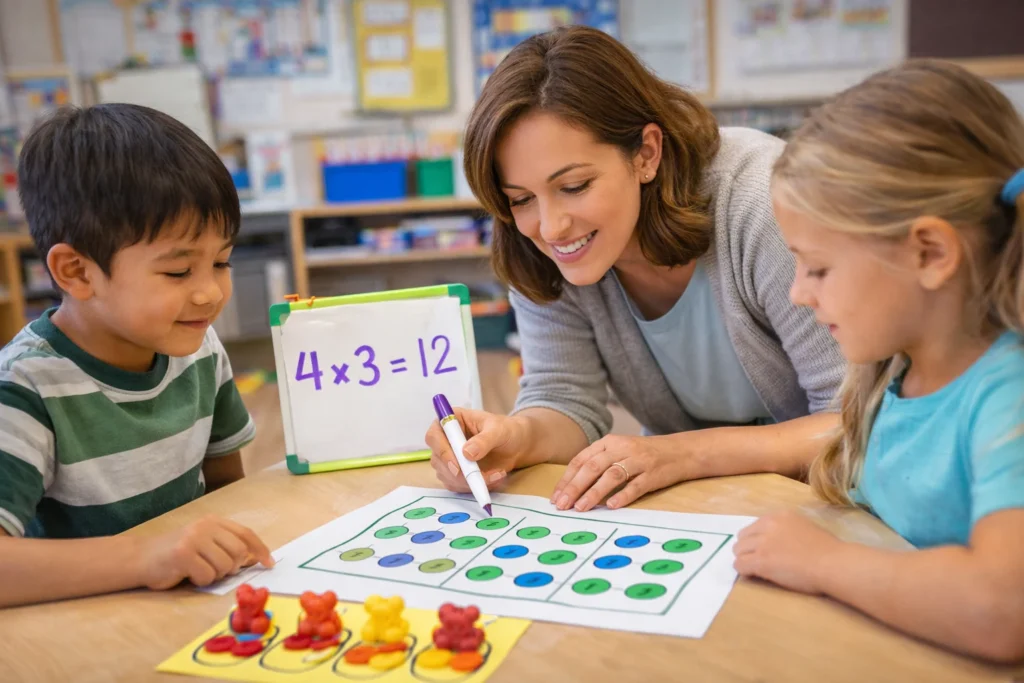
In real teaching environments, students who learn conceptually outperform those who memorize early. The difference shows in confidence, accuracy, and attitude.
I’ve seen quiet students speak up.
I’ve seen parents surprised by sudden progress.
Case Insight: Helping Students Overcome Math Anxiety
One student froze every time numbers appeared.
We removed tables. Added objects. Slowed down.
Within weeks, answers came with explanations.
Parents noticed the change first.
That’s meaningful math learning at work.
How These Strategies Improved Confidence and Results
Understanding gave students control.
Control built trust.
That’s what teaching math without memorization offers long-term.
Explore More: Simple Addition and Subtraction Tricks for Kids
Frequently Asked Questions About Teaching Multiplication Without Memorization
How can I teach multiplication without memorization?
Start with groups, visuals, and hands-on activities. Build meaning first. Add facts later.
What are fun ways to learn multiplication?
Games, arrays, real objects, and movement-based activities work well.
How do manipulatives help with multiplication?
They turn abstract numbers into visible quantities students can reason through.
What is the best way to teach multiplication to kids?
Begin with understanding. Support thinking. Let memorization follow naturally.