
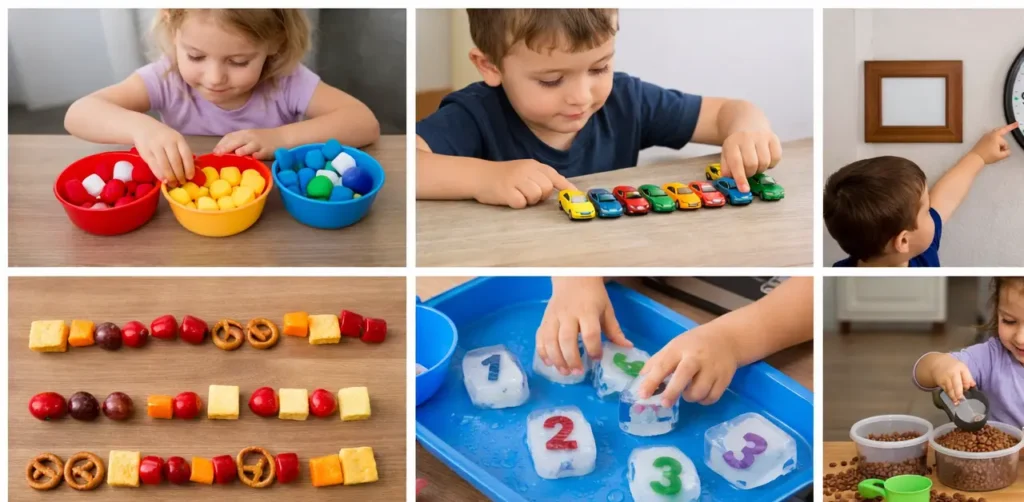
What Are Fun Math Activities for Preschoolers at Home?
Fun math activities for preschoolers at home are short, hands-on games that help young children understand numbers, shapes, and patterns through play instead of worksheets. These activities use everyday items, take very little time, and fit naturally into home routines without pressure or screens.
I’ve seen many parents worry that math has to look “academic” to count.
That stress usually backfires.
At this age, math works best when it feels like play, not a lesson.
What parents are really searching for is simple.
They want something easy to set up, quick to finish, and enjoyable for their child.
They also want proof it’s actually helping.
That’s where learning through play comes in.
When children touch, sort, count, and build, their brains start forming early math skills without them even noticing.
No apps. No drills. Just screen-free learning that feels natural.
At home, hands-on math happens during ordinary moments.
Counting toys. Sorting socks. Spotting shapes in the room.
These small actions add up faster than most parents expect.
Why Early Math Activities at Home Matter
Early math activities at home matter because they shape how children feel about numbers long before school begins, influencing confidence, focus, and problem-solving ability rather than just counting ability.
I’ve worked with parents whose children already felt “bad at math” by age five.
That fear didn’t come from numbers.
It came from pressure and correction too early.
Core Early Math Skills Built Through Play
Counting and number sense grow when children count real objects, not printed numbers.
Touching each item supports one-to-one correspondence, which prevents guessing later.
Patterns and sequencing help children predict what comes next.
This skill shows up later in reading and logical thinking.
Shapes and spatial awareness build when children stack, sort, and search their environment.
That physical movement supports memory and reasoning.
Problem-solving and reasoning appear when children figure things out on their own.
Small puzzles now prevent frustration later.
Real Experience With Parents and Preschool Learners
I’ve seen parents start with confusion and worry.
They thought their child was behind because worksheets failed.
After using short, structured at-home math activities, things shifted.
Children stayed focused longer.
They explained answers out loud.
Counting became accurate instead of rushed.
The biggest change wasn’t skill.
It was confidence building.
Once fear faded, learning followed.
How to Choose the Right Math Activities for Your Preschooler
The right math activities for a preschooler match attention span, use familiar objects, and stay short enough to end before frustration begins.
I always tell parents one thing first.
If an activity feels heavy, it’s too much.
Math at this age should feel light.
What Makes a Good At-Home Math Activity
Low or no prep matters.
If setup feels annoying, consistency breaks.
Short duration keeps interest alive.
Five to ten minutes is enough.
Household materials lower resistance.
Kids relax when objects feel familiar.
Adjustable difficulty keeps growth steady.
An activity should stretch thinking, not overwhelm it.
Age-Based Skill Readiness
| Age | Skill Focus | Activity Types |
| 3–4 | Counting, sensory | Sorting, scooping |
| 4–5 | Patterns, shapes | Matching, games |
| 6-8 | Addition, logic | Challenges, building |
I’ve seen toddlers thrive with simple scooping games.
Preschoolers often light up with matching and patterns.
Older children enjoy building and small challenges.
10 Fun Math Activities for Preschoolers at Home
1. Pom-Pom Sorting
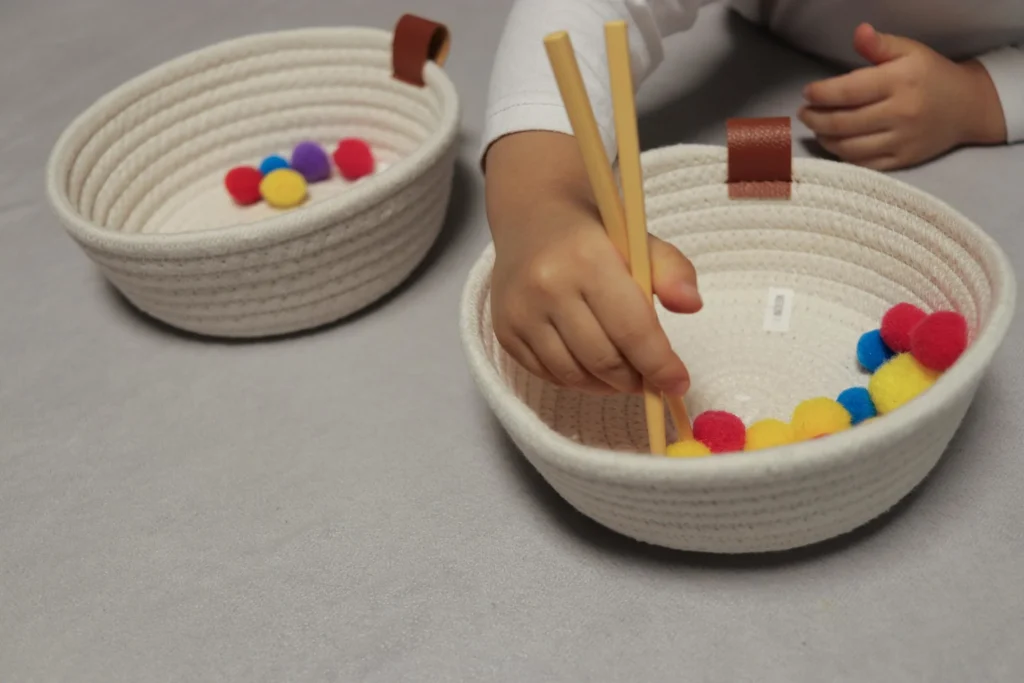
Skill focus: Sorting and counting
Materials: Pom-poms, bowls, cups
Place different colors in a pile.
Ask the child to sort by color.
Count each group together.
To make it harder, sort by size or color plus size.
This builds logic without pressure.
2. Counting with Everyday Objects
Skill focus: Counting and one-to-one correspondence
Materials: Toys, spoons, blocks
Count objects slowly while touching each one.
Say numbers out loud together.
Common mistake: Counting too fast.
Fix: Slow down and point to each item.
3. Shape Hunt Around the House
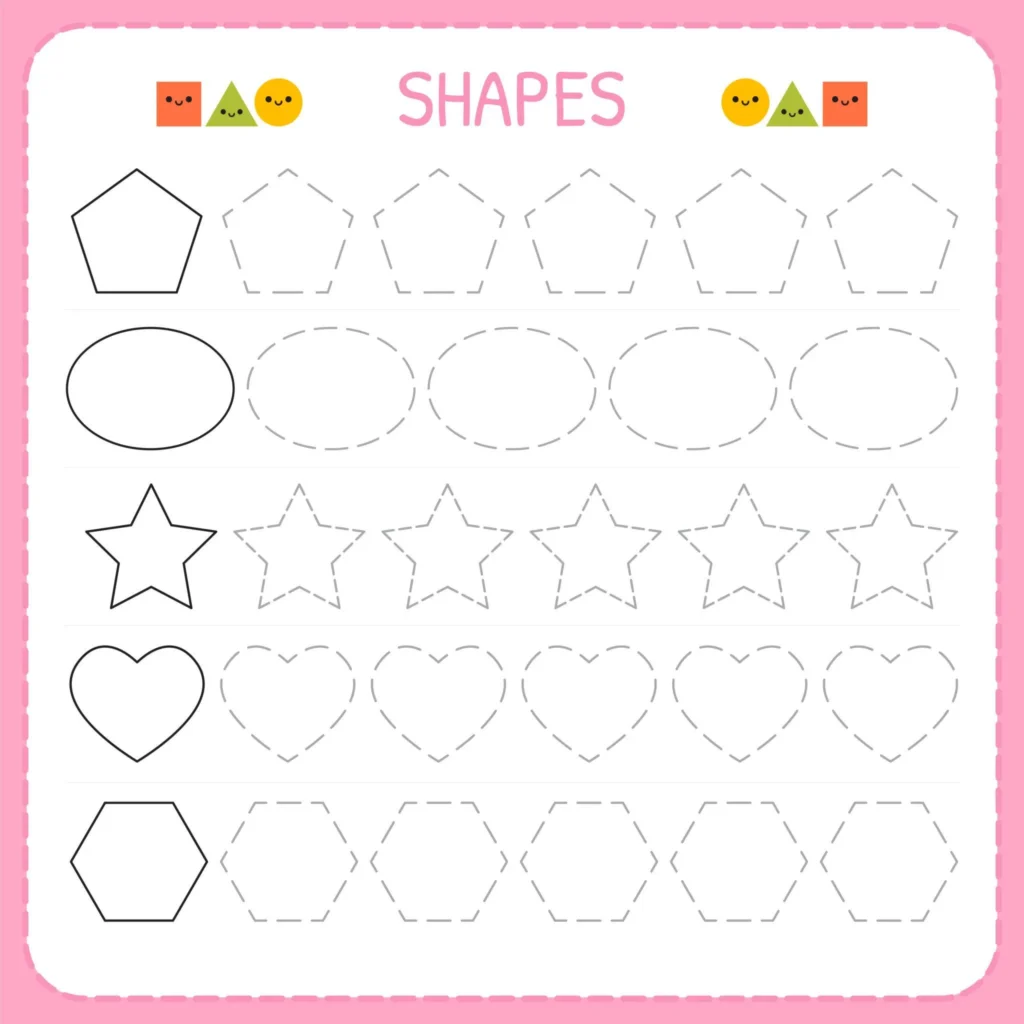
Skill focus: Shapes and spatial awareness
Materials: None
Search for circles, squares, and rectangles at home.
Name each shape when found.
Extension: Draw the shapes on paper.
4. Pattern Play with Snacks or Blocks
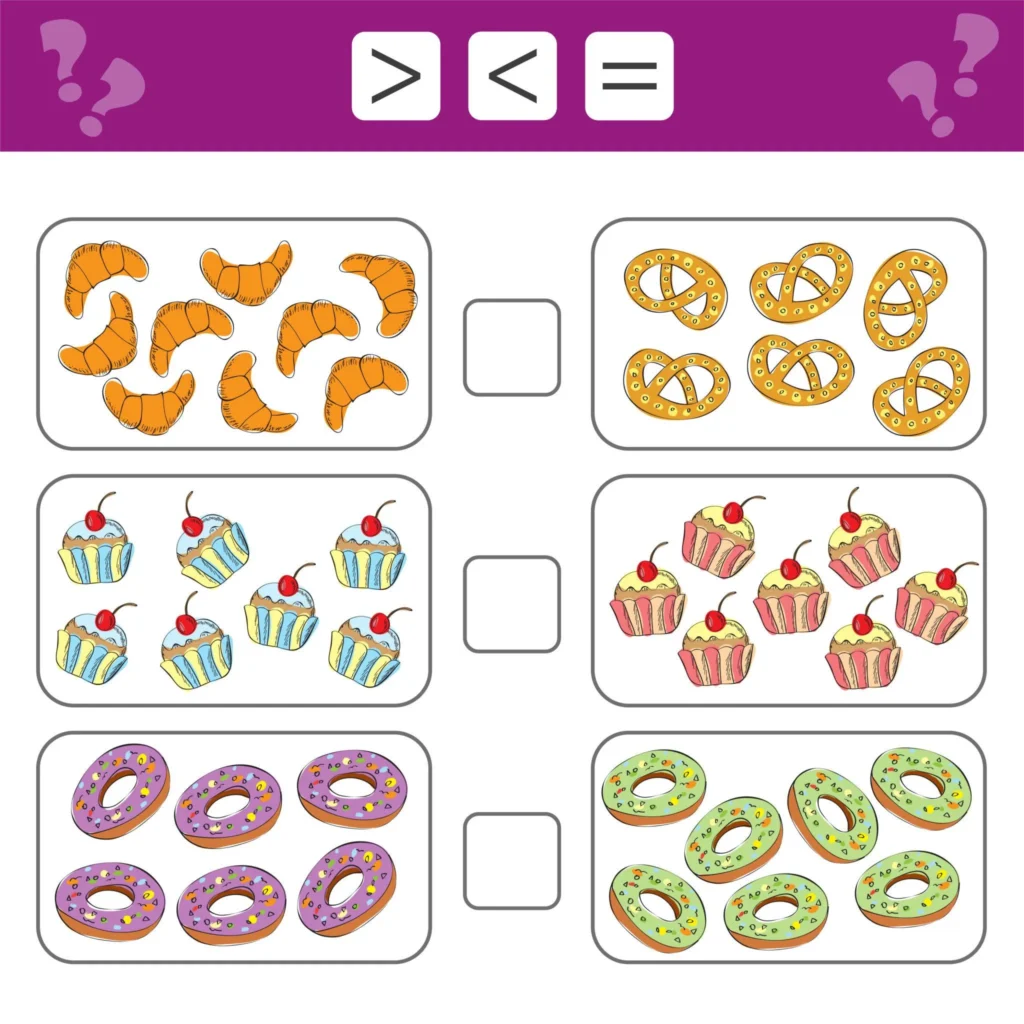
Skill focus: Patterns and sequencing
Materials: Snacks or blocks
Create simple AB or AAB patterns.
Ask what comes next.
Let the child lead the pattern choice.
5. Ice Cube Number Play
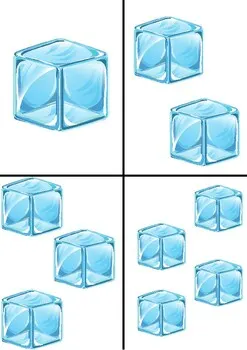
Skill focus: Counting and comparison
Materials: Ice tray, small objects
Freeze items inside ice cubes.
Count while melting and comparing sizes.
Cold textures increase focus.
6. Bean Scooping and Pouring
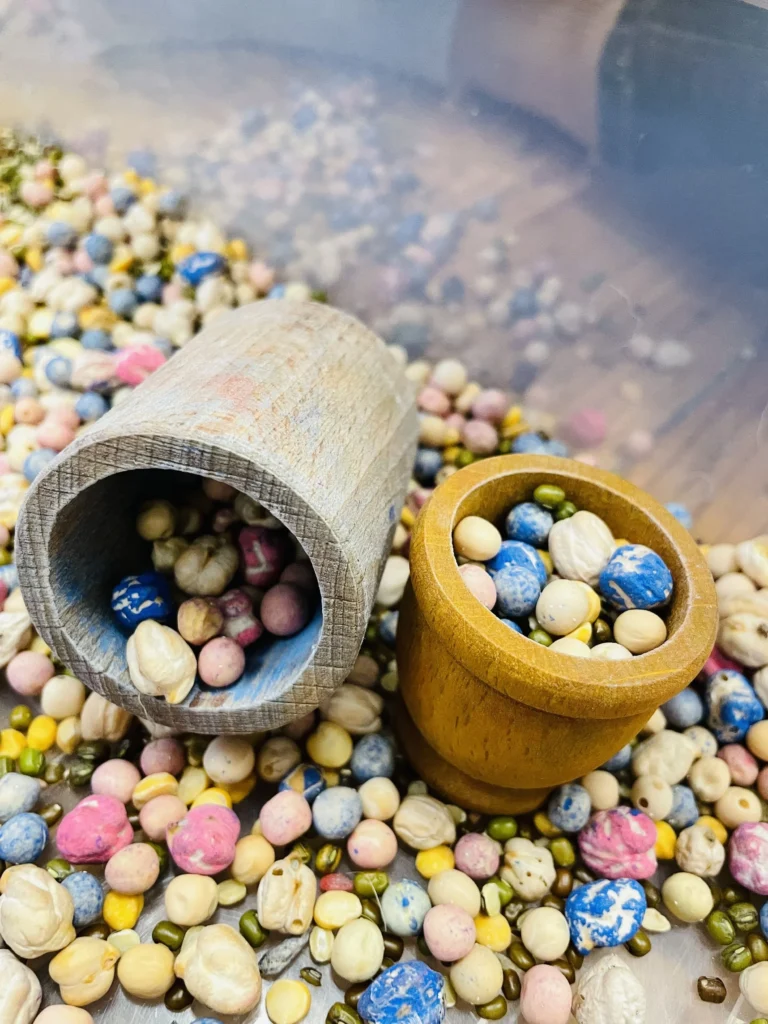
Skill focus: Measurement
Materials: Beans, cups, spoons
Fill and empty containers.
Use words like full and empty.
Language builds math meaning.
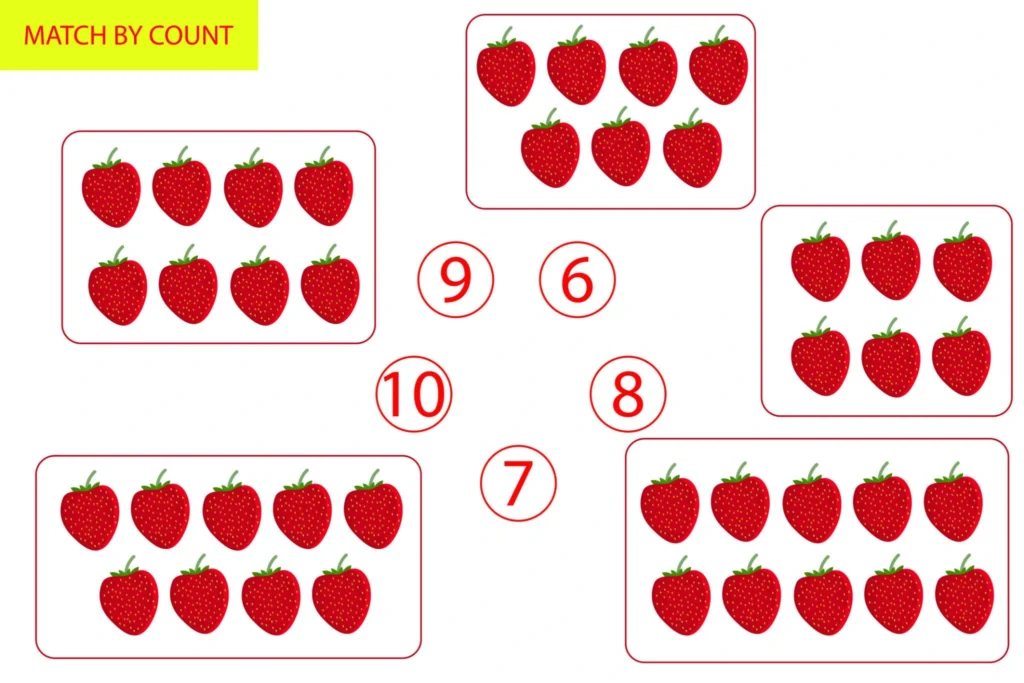
7. Math Matching Cards
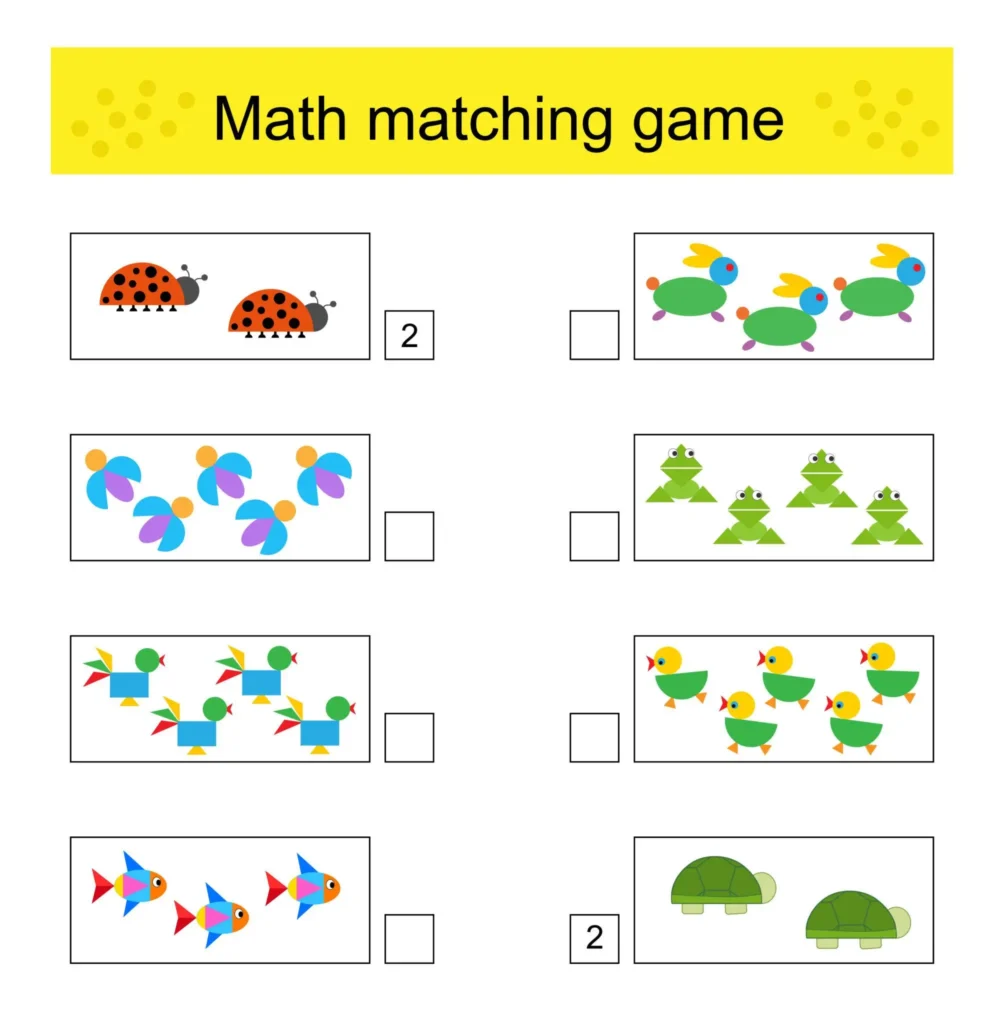
Skill focus: Number recognition
Materials: Number cards, object cards
Match numbers to quantities.
Pause when guessing starts.
8. Beginner Addition with Toys (Ages 4–5)
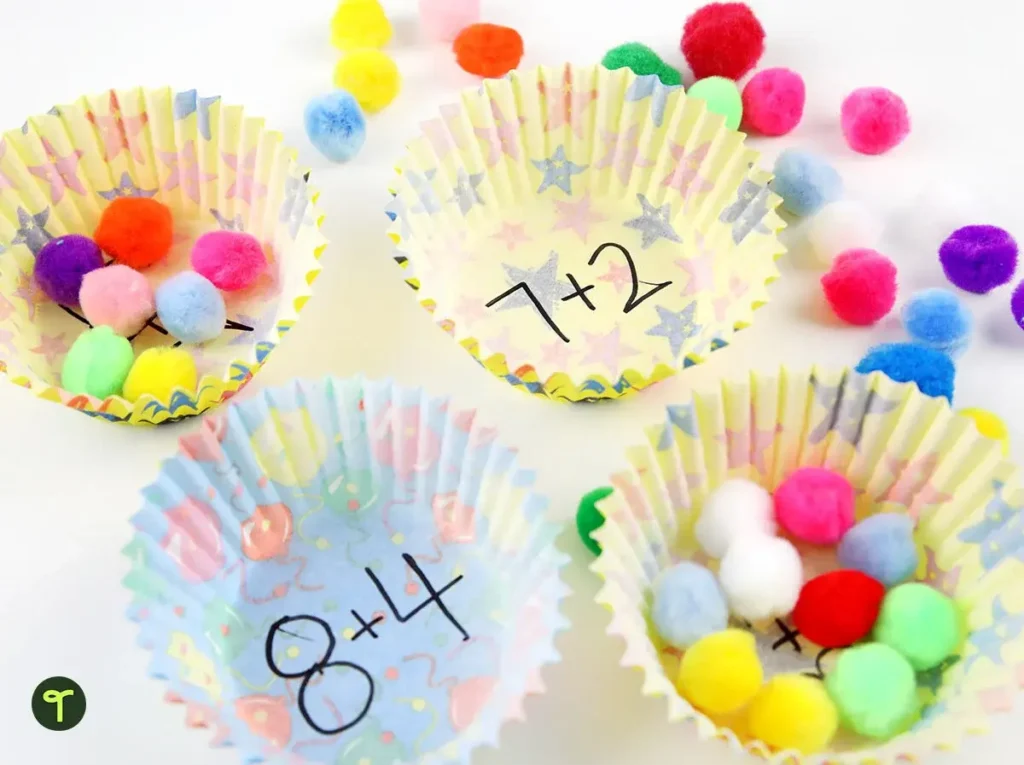
Skill focus: Simple addition
Materials: Small toys
Add two small groups.
Stop once interest fades.
9. Time and Sequence Using Daily Routines
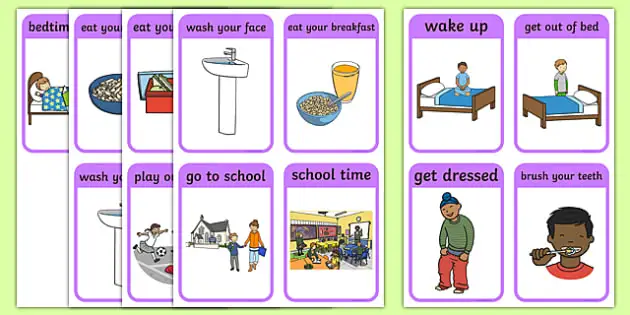
Skill focus: Order and sequence
Materials: Daily routine
Talk about what comes first and next.
No clocks needed.
10. Build-and-Count Geometry Towers
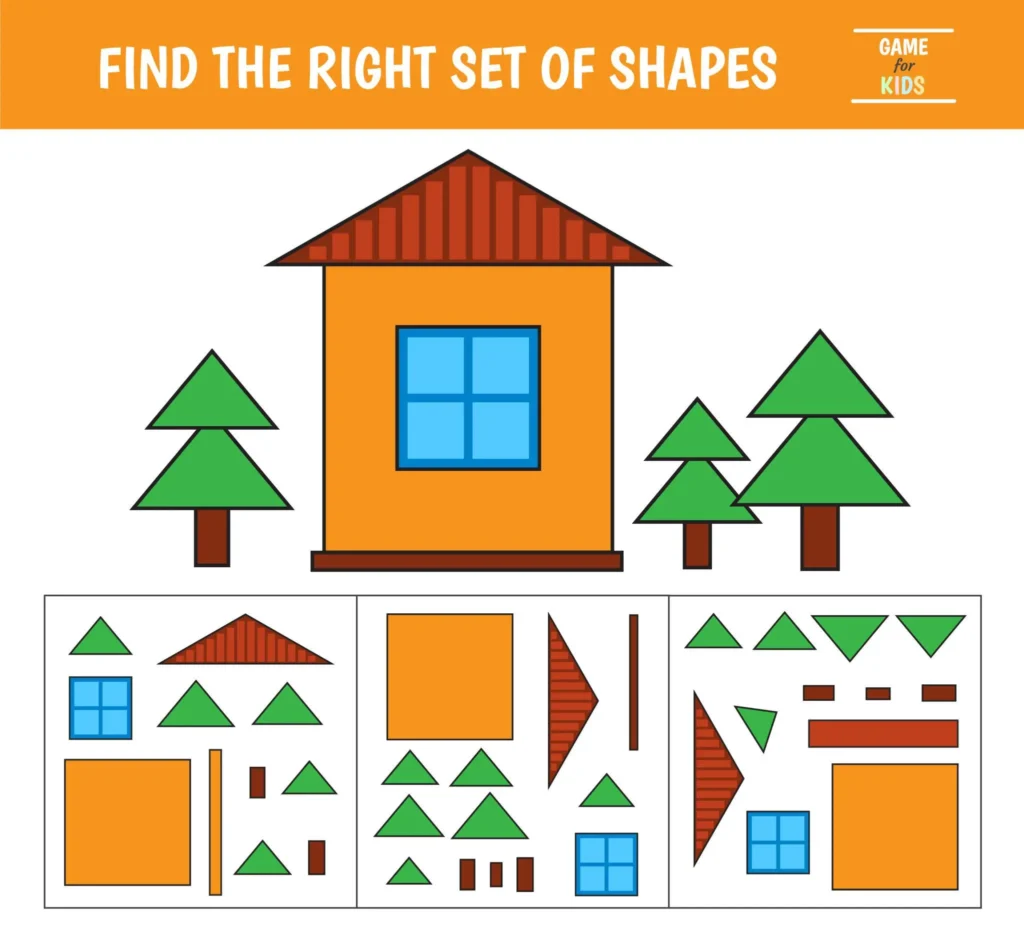
Skill focus: Spatial reasoning
Materials: Blocks
Build towers and count height.
Compare taller and shorter.
How to Adjust These Math Activities for Different Ages
Math activities work best when difficulty changes with the child rather than replacing the activity itself.
| Activity | Easier Version | Harder Version |
| Counting | Count to 3 | Compare quantities |
| Sorting | One attribute | Multi-attribute |
| Shapes | Identify | Draw and describe |
Small changes keep growth steady.
Common Parent Mistakes and How to Fix Them
Most struggles come from rushing, correcting too quickly, or extending activities too long.
Rushing leads to guessing.
Slow counting fixes it.
Overcorrecting lowers confidence.
Questions work better.
Long sessions cause resistance.
Short bursts keep interest.
How to Naturally Add Math into Daily Life
Daily routines offer the easiest way to support math without extra time.
| Daily Activity | Math Skill |
| Cooking | Measuring |
| Laundry | Sorting |
| Grocery | Counting |
| Playtime | Patterns |
These moments feel safe and familiar.
Are Worksheets or Daycare Enough for Preschool Math?
Worksheets and daycare support learning, but home interaction builds confidence faster because children feel safe making mistakes.
Hands-on play supports thinking.
Home reinforcement builds trust.
Final Thoughts: Helping Your Child Love Math from the Start
Children who enjoy math early carry confidence forward, even when work becomes harder later.
Fun matters more than pressure.
Short routines beat long sessions.
Confidence grows before accuracy.
That’s how fun math activities for preschoolers at home make a lasting difference.
Explore more: 10 Steps to Help a Child Feel Confident in Math
FAQs
1. What are fun math activities for preschoolers at home?
Fun math activities for preschoolers at home are short, play-based games that teach counting, shapes, and patterns using everyday household items. These activities focus on hands-on learning rather than worksheets, helping children build early math skills while staying relaxed and engaged.
2. How do I teach math to my preschooler at home?
You teach math to a preschooler at home by using daily routines like counting toys, sorting laundry, and spotting shapes around the house. Keeping activities short and playful helps children understand numbers naturally without pressure or formal lessons.
3. What math skills should a preschooler learn first?
The first math skills preschoolers should learn are counting, number recognition, one-to-one correspondence, shapes, and simple patterns. These skills form the base for later learning and are best developed through hands-on, real-life activities.
4. How can I make math fun for preschoolers?
Math becomes fun for preschoolers when it feels like play instead of work. Using games, movement, and familiar objects helps children stay curious, lowers frustration, and builds confidence while learning numbers and problem-solving skills.
5. Are worksheets effective for preschool math?
Worksheets alone are not very effective for preschool math because young children learn best through movement and touch. Hands-on activities and play-based learning help children understand math concepts more clearly and with less stress.