
Complete the Whole Hundreds and Thousands: Grade 4
Complete the whole means find the missing part that makes a round number like 100, 1,000 or 10,000. Count up from the part you have to the whole, or subtract the part from the whole. For 340 + ___ = 1,000, the missing part is 660. I teach it as filling a bottle. The whole […]
How to Add 2-Digit Numbers Using Horizontal Method: Grade 4
Add 2-digit numbers with the horizontal method by splitting each number into tens and ones. Add the tens together and the ones together, then join the two results. For 34 + 25, split into 30 and 4, and 20 and 5. Join 50 and 9 to make 59. I teach this as sorting first, adding […]
Rounding Word Problems: Grade 4
Word problems that ask “about how many” want a rounded answer. Rounding first gives you friendly numbers you can add or subtract fast. I teach children to round first, work with the friendly numbers, then say both answers out loud: the estimate and the exact answer. What Does “About How Many” Mean in a Word […]
How to Round Numbers: A Grade 4 Guide
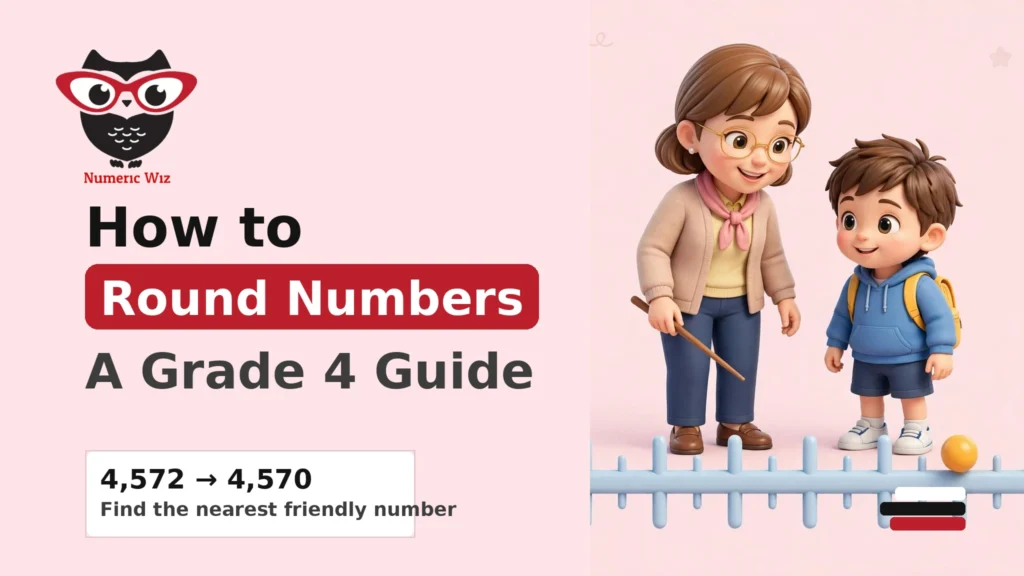
Rounding finds the friendly number closest to yours. The number 4,572 sits between 4,570 and 4,580, and 4,570 is nearer. I teach rounding on a number line first, so children see the closeness before they learn any shortcut. How Do You Round a Number, in Plain Words? Rounding means replacing a number with the nearest […]
How to Compare and Order Numbers: Grade 4
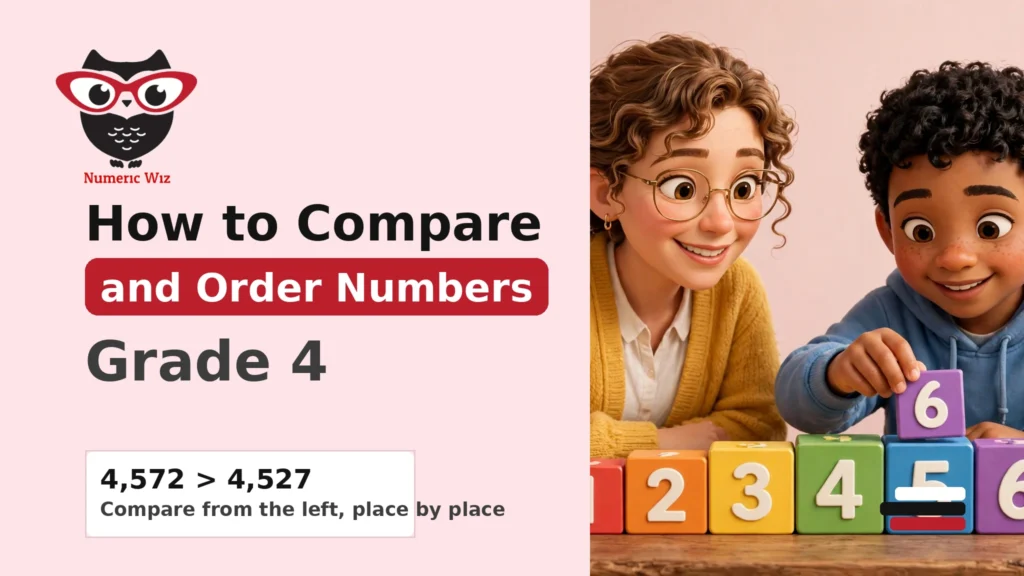
Comparing two numbers is a place-by-place race from the left. The first place where the digits differ decides which number is bigger. Ordering uses the same idea again and again. I teach the left-to-right race first, and the > and < signs only after that idea is clear. How Do You Compare Two Numbers, in […]
What Is Expanded Form? A Grade 4 Guide
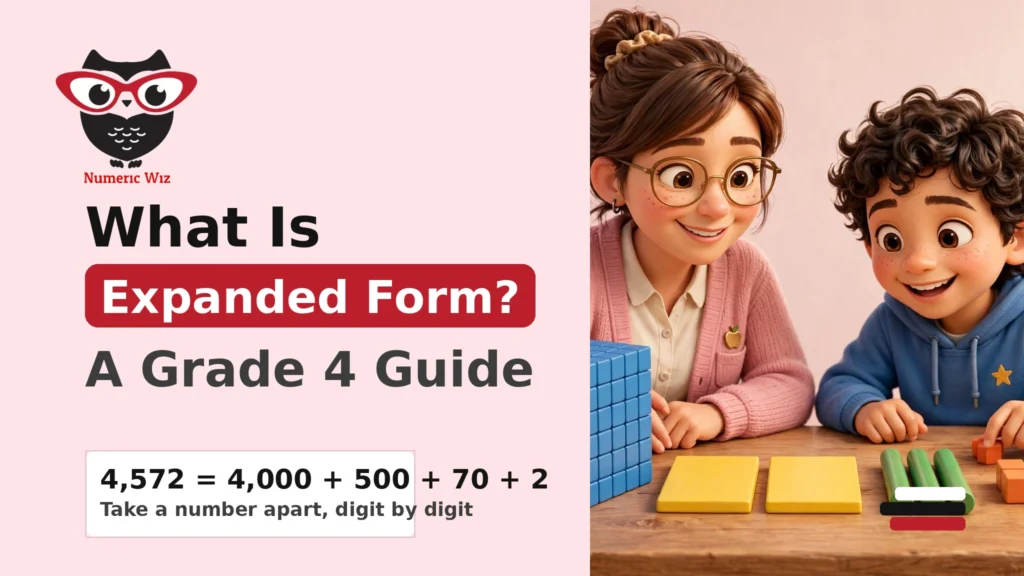
Expanded form pulls a number apart into the worth of each digit. The number 4,572 becomes 4,000 + 500 + 70 + 2. Add the parts back and you get 4,572 again. I teach it as taking a number apart, then putting it back together to check your work. What Is Expanded Form, in Plain […]
How to Build a Number from Digits: Grade 4
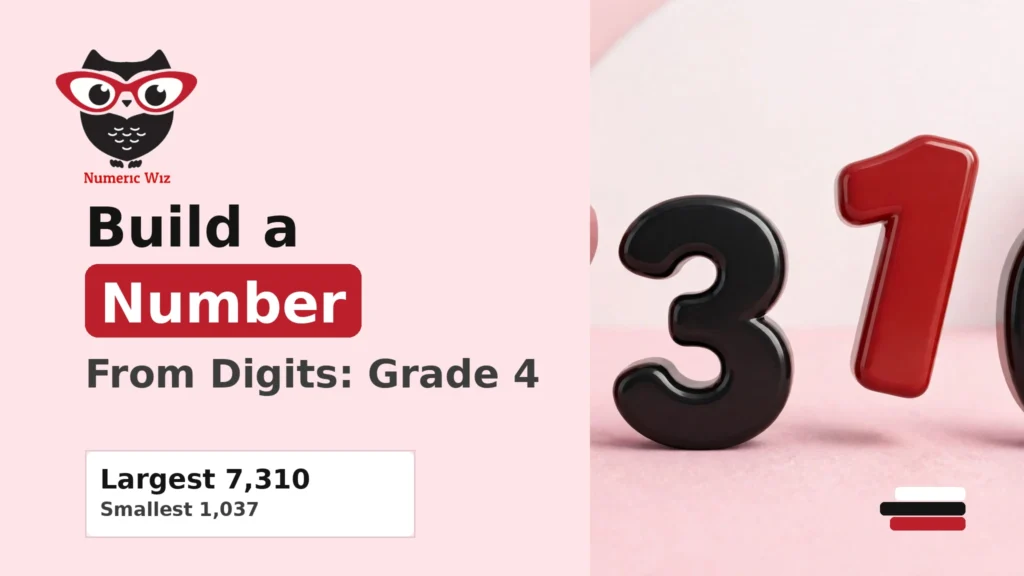
Building a number from digits is a sorting game. You get a handful of digits, and you line them up to make the largest number you can, or the smallest. No adding, no multiplying, just sorting. This guide shows the two moves you need, with the digits from our Grade 4 sheets. What Does Building […]
What Is Place Value? A Grade 4 Guide
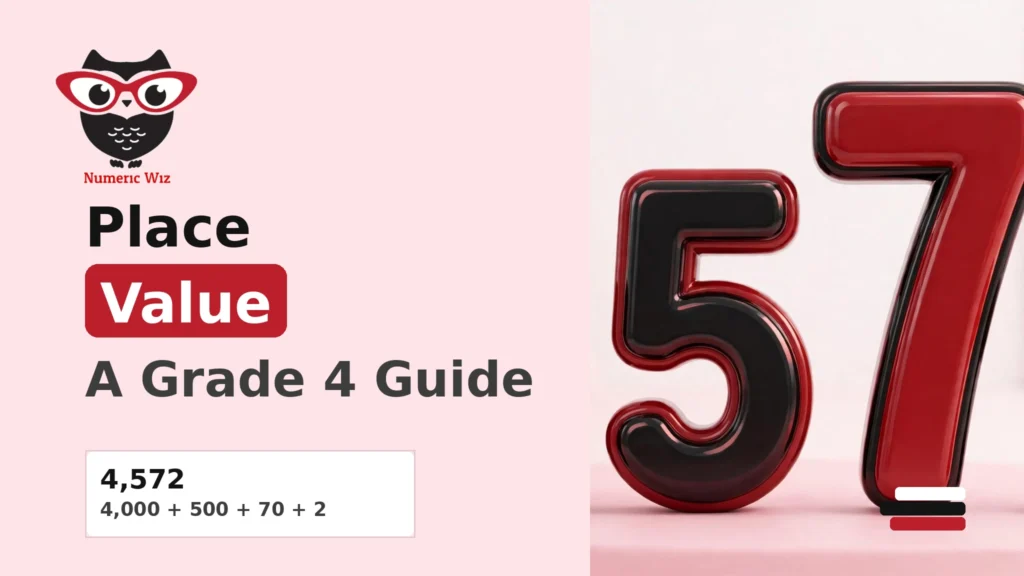
Place value tells you what a digit is worth. The digit 5 is worth 500 in 4,572, but it is worth 5,000 in 5,472. The digit stays the same. Its place changes its worth. That one idea runs all of Grade 4 number work, and this guide walks through it with real numbers. What Is […]
How to Solve Percentage Word Problems: Grade 6
A percentage word problem asks you to find a missing number in a story about marks, money or savings. Every one of them is the same question in three forms: find the part, find the whole, or find the percent. Once you know which one the story asks for, the same over-100 idea solves it. […]
How to Convert Percentages to Fractions: Grade 6
A percentage is already a fraction out of 100, so converting it back is the easy direction. Write the number over 100, then simplify the fraction. That is all there is to it, and the marks and shopping examples below show each step. What Does Converting a Percentage to a Fraction Really Mean? Converting a […]