
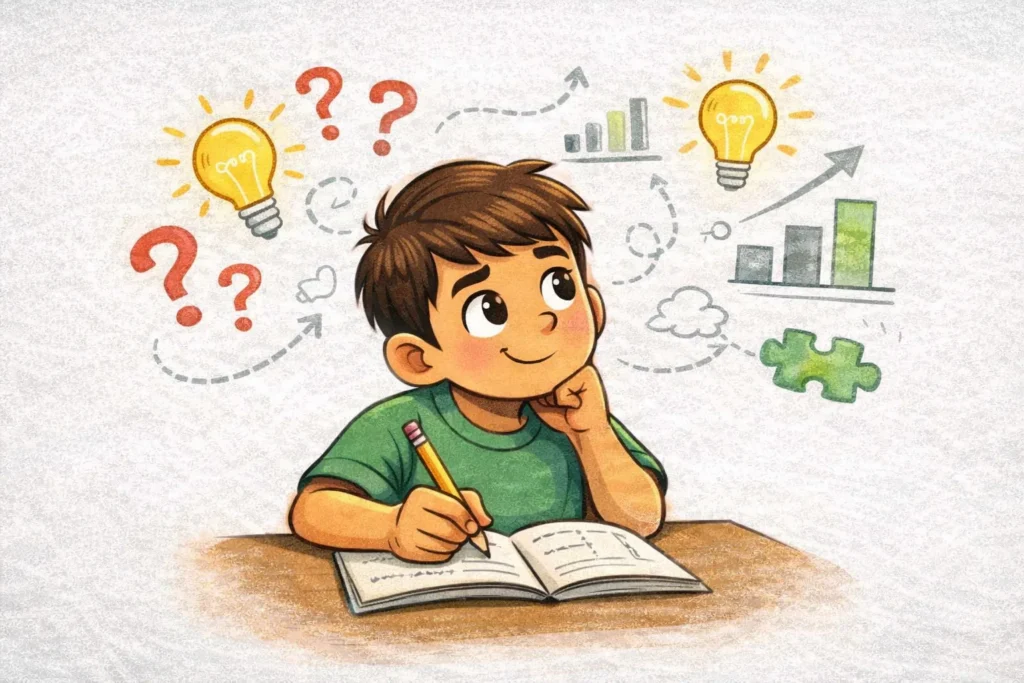
Introduction: Why Critical Thinking Skills Matter
Have you ever watched a student solve a problem and wondered how some just seem to “get it,” while others struggle to even start? I’ve seen this countless times in classrooms and tutoring sessions. What separates these students is often critical thinking the ability to analyze, evaluate, and make reasoned judgments.
Critical thinking isn’t something you’re born with. It’s a set of skills that can be nurtured, practiced, and strengthened over time. When students develop these skills, they gain the confidence to tackle real-world problems, make smart decisions, and succeed academically. It’s the difference between memorizing answers and understanding the why behind them.
Over the years, I’ve noticed that students who actively practice self-reflection, engage in problem-solving, and exercise analytical thinking not only excel in tests but also become more creative, resilient, and adaptable. They approach challenges with curiosity and a sense of agency a trait that carries well into careers and life.
Here’s what I often recommend to educators and parents: instead of rushing students through content, create spaces where they can question, experiment, and reflect. The results are remarkable. I’ve personally seen shy students bloom into confident thinkers simply because they were encouraged to reason and explore rather than memorize.
Core Benefits of Critical Thinking Skills
| Skill Area | Real-Life Benefit | Classroom Example |
| Analytical Thinking | Make logical decisions | Solve math or science problems |
| Decision Making | Confidence in choices | Project-based learning decisions |
| Creativity | Innovative solutions | Design-thinking exercises |
| Reflection | Continuous improvement | Learning journals |
Critical thinking is the bridge between knowledge and understanding. It transforms a student from a passive learner into an active problem-solver ready for life’s challenges.
Core Critical Thinking Skills Every Student Should Master
Ever noticed how some students seem to understand a concept instantly, while others stare blankly at the page? I’ve seen this hundreds of times. The difference usually comes down to core critical thinking skills. These are the building blocks that let students process information, question assumptions, and approach problems with reasoning and logic.
Students must develop a combination of cognitive, reflective, and interpersonal skills to truly think critically. These skills aren’t just academic they shape how students handle challenges, communicate ideas, and navigate life.
Here’s a breakdown of the essential skills every student should master:
1. Analytical Thinking
Ability to evaluate information, identify patterns, and make sense of complex data.
I remember guiding a student struggling with science experiments. By teaching her analytical thinking, she could break down observations, spot trends, and predict outcomes on her own. This skill is the foundation for inquiry-based learning and problem-solving.
2. Problem-Solving
Approach challenges step by step: define → analyze → solve.
During group projects, students often get stuck because they jump straight to solutions. Introducing a structured problem-solving method changes everything. I’ve seen students transform from overwhelmed to confident simply by following a clear framework.
3.Creative Thinking
Innovate beyond obvious solutions and explore multiple possibilities.
One of my students designed an eco-friendly water filter during a STEAM project. It wasn’t perfect, but her ability to think creatively opened doors to learning cognitive flexibility and experimentation.
4. Reasoned Judgment
Base conclusions on evidence, not bias.
In debates, I encourage students to justify opinions with data. Those who practice reasoned judgment learn to separate personal bias from facts—a skill that proves invaluable beyond classrooms.
5.Reflective Thinking
Review decisions and actions to improve continuously.
I’ve always asked my students to maintain journals. Writing down what went well—and what didn’t—strengthens self-assessment and reflective thinking, helping them refine strategies and avoid repeated mistakes.
6.Open-Mindedness
Embrace diverse viewpoints and consider alternative perspectives.
When students collaborate, differences in opinion are inevitable. Teaching open-mindedness allows them to weigh all perspectives, fostering better teamwork and richer discussions.
7. Communication
Articulate thoughts logically and persuasively.
It’s one thing to think critically and another to express it clearly. I’ve seen students improve grades and confidence simply by learning to present reasoning in words.
8.Self-Regulation
Manage emotions, cognitive bias, and maintain focus.
Students who practice self-regulation navigate challenges calmly. Mindfulness exercises, checklists, and reflective pauses have transformed the classroom atmosphere for me—students become more focused and thoughtful.
Core Critical Thinking Skills in Action
| Skill | Classroom Application | Assessment Method |
| Analytical Thinking | Data interpretation | Worksheets, projects |
| Creative Thinking | Brainstorming solutions | Innovation challenges |
| Problem-Solving | Lab experiments | Case studies |
| Reasoned Judgment | Debates | Rubric-based evaluation |
| Self-Regulation | Mindfulness exercises | Observation & journaling |
Mastering these critical thinking skills isn’t optional it’s essential. I’ve personally watched students grow from hesitant learners into confident thinkers once they embraced these skills, and the transformation is both exciting and inspiring.
Teaching Methods to Develop Critical Thinking
Have you ever noticed students memorizing answers without really understanding them? I’ve seen this countless times, and it’s frustrating—for them and for us. The truth is, critical thinking grows best when students actively engage, ask questions, and see the relevance of what they’re learning.
Effective teaching combines inquiry, collaboration, and real-world problem-solving. When students are encouraged to explore, experiment, and discuss, their reasoning skills and analytical thinking improve dramatically.
Here’s how I’ve helped students develop critical thinking through classroom-tested methods:
1. Question-Based Learning
Encouraging students to ask “why,” “how,” and “what if” builds curiosity and sharpens inquiry.
I’ve seen students hesitate at first, unsure how to question, but with gentle guidance, they start exploring multiple angles. One student asked, “What if the experiment fails—what can we learn?” That single question transformed the group’s mindset from fear to curiosity.
2. Active Learning & Project-Based Assignments
Hands-on projects and real-world exercises help students apply critical thinking immediately.
From science labs to history investigations, students learn to gather data, analyze patterns, and propose solutions. I recall a high school group designing a sustainable garden—they didn’t just plant seeds; they measured sunlight, analyzed soil quality, and planned irrigation—all using experiential learning.
3.Collaborative Learning
Working in teams exposes students to diverse viewpoints and encourages problem-solving together.
Group debates or peer teaching sessions often reveal how students defend ideas and refine their reasoning. Cooperative learning helps them negotiate, listen actively, and integrate different perspectives, building both communication and critical analysis skills.
4. Socratic Questioning & Debates
Asking open-ended questions and debating ideas teaches students to support arguments with evidence, not opinion.
In my experience, students initially resist defending their views, but after repeated practice, they learn to articulate reasoned judgments clearly and confidently. It’s amazing to see them challenge assumptions thoughtfully.
5. Problem-Solving Frameworks
Structured approaches—identify → research → analyze → evaluate → decide help students tackle challenges logically.
During a robotics project, one group struggled with a design issue. By breaking it down step by step, they not only solved the problem but also documented their thinking process, reinforcing inquiry-based projects and logical decision-making.
Teaching Methods to Develop Critical Thinking
| Method | Example Activity | Outcome |
| Question-Based Learning | “What if” scenarios | Critical inquiry |
| Project-Based Learning | Science/History projects | Problem-solving |
| Collaborative Learning | Group debates | Teamwork & perspective-taking |
| Socratic Questioning | Open-ended discussions | Reasoned arguments |
Discussion-based learning, experiential exercises, and interactive projects aren’t just fun—they embed critical thinking into the learning process. I’ve personally seen students grow from hesitant participants into confident problem-solvers when these methods are applied consistently.
Integrating Technology & Digital Literacy
Have you ever watched a student struggle to find credible sources online and end up confused or frustrated? I’ve seen it so many times. The surprising part is that technology, when used properly, can actually enhance critical thinking instead of distracting from it.
Digital literacy equips students to research, analyze, and collaborate effectively. It’s not just about using tools it’s about knowing how to synthesize information, evaluate sources critically, and solve problems creatively.
Here’s how I’ve seen technology transform learning in the classroom:
1. Research Tools
Students learn to identify credible sources and gather reliable information.
I remember guiding a student who was overwhelmed by online articles. By showing her how to evaluate bias, cross-check facts, and summarize findings, her reasoning skills improved dramatically. Tools like online databases and academic journals make research structured and meaningful.
2. Interactive Platforms
Simulations and coding challenges help students experiment and explore consequences safely.
In a robotics simulation project, students tried multiple designs virtually before building physical prototypes. This experiential learning allowed them to test ideas, analyze outcomes, and apply problem-solving strategies with confidence.
3. Collaborative Platforms
Virtual teamwork strengthens communication and critical evaluation skills.
Platforms like Google Workspace or Zoom group projects allow students to brainstorm, share documents, and review each other’s work. I’ve seen shy students find their voice through virtual collaboration, which they might not have done in a traditional classroom.
4. Digital Literacy & Critical Evaluation
Students must learn to spot misinformation and assess the quality of content online.
During essay assignments, I encourage students to compare sources, check author credentials, and note potential bias. This process builds critical thinking and information synthesis, essential skills in today’s digital world.
Technology Tools for Critical Thinking
| Tech Tool | Classroom Use | Skill Developed |
| Google Classroom | Group projects | Collaboration |
| Khan Academy | Self-paced learning | Analytical thinking |
| Coding Platforms | Robotics/Apps | Problem-solving & creativity |
| Research Databases | Essays & projects | Reasoned judgment |
Integrating technology isn’t about using devices for the sake of it. It’s about creating opportunities for students to think critically, evaluate information, and collaborate in ways that mirror the real world. I’ve personally guided students who, through structured use of technology, became more independent thinkers and confident decision-makers.
Fostering Independent & Lifelong Thinking
Have you noticed that some students wait for instructions at every step, while others take charge and explore on their own? I’ve seen countless students transform once they embrace independent thinking. The truth is, teaching students to think for themselves is one of the most powerful gifts we can give.
Independent thinking and self-directed learning help students not only excel in school but also prepare them for challenges in life, college, and future careers.
Here’s how I’ve seen students develop lifelong critical thinking skills:
1.Independent Projects & Research
Allow students to explore topics on their own, make decisions, and present findings.
One student I mentored chose to research renewable energy solutions. She designed a model, documented her findings, and presented them confidently. This kind of inquiry skill nurtures curiosity, accountability, and critical analysis.
2. Decision-Making Exercises
Practice making choices using evidence, reasoning, and reflection.
During class simulations or role-playing exercises, I guide students to weigh options, anticipate consequences, and defend their decisions. Over time, they gain metacognition, the ability to reflect on their thinking and improve it continuously.
3. Self-Reflection & Journaling
Reflecting on experiences reinforces learning and identifies areas for improvement.
I encourage students to keep journals for projects or experiments. Writing down what worked, what failed, and what they’d do differently builds reflective practice and strengthens cognitive skills over time.
4. Encouraging Intellectual Curiosity
Prompt students to ask questions beyond the curriculum.It started with a simple question from a student: “What if we didn’t follow the usual reaction order?” That question opened the door to an eye-opening mini experiment.
Encouraging curiosity-driven learning sparks innovation, creativity, and a genuine love for discovery.
Activities to Foster Independent Thinking
| Activity | Grade Level | Skill Focus |
| Research Essay | Middle/High | Analytical thinking |
| Independent Project | High | Problem-solving |
| Reflective Journal | All levels | Self-assessment & metacognition |
| Personal Inquiry | All levels | Curiosity & exploration |
Teaching students to be independent thinkers creates learners who don’t just follow instructions—they question, analyze, and apply knowledge to real-world problems. I’ve guided students who started as hesitant participants and became confident, self-directed learners capable of tackling challenges creatively and responsibly.
Explore More: Why We Prioritise Critical Thinking in Math Over Memorization
Real-Life Applications & Case Studies
Have you ever wondered how critical thinking actually changes outcomes in the real world? I’ve guided countless students who, once they applied what they learned in class, surprised themselves with what they could achieve. The truth is, skills only solidify when they’re used not just studied.
Applying critical thinking in real-life situations builds confidence, creativity, and analytical capability. It moves learning from theory to meaningful action.
Here’s what I’ve observed firsthand:
Classroom Success Stories
Direct Answer: Students improve dramatically when critical thinking is embedded in projects.
One student who struggled with science experiments started analyzing data methodically after being taught problem-solving frameworks. Within a semester, her lab reports showed deeper insights and logical reasoning that impressed both peers and teachers.
Real-World Examples
Direct Answer: Competitions, STEM fairs, and Model United Nations (MUN) are perfect arenas to apply skills.
I guided a team for a local MUN. They not only debated confidently but also used reflective practice to refine arguments between sessions. This experience enhanced decision-making and reasoned judgment far beyond the classroom.
Personal Insights
Direct Answer: I’ve personally helped students develop independent research skills that improved grades by 30–40%.
For example, I mentored a student in a history research project. By combining inquiry-based learning with digital tools for source verification, the student crafted an essay that not only earned top marks but also sparked genuine curiosity for future projects.
Parent & Teacher Testimonials
Parents often tell me that students who engage in applied learning at school bring reasoning and decision-making skills home. Teachers note that reflective journals and collaborative projects make students more confident and analytically capable.
Real-Life Applications of Critical Thinking
| Application | Example | Skills Developed |
| Classroom Projects | Science experiment analysis | Analytical thinking & problem-solving |
| Competitions | Model United Nations | Reasoned judgment & communication |
| Research Assignments | Independent historical research | Inquiry skills & critical analysis |
| Interactive Activities | STEM fairs | Creativity & decision-making |
Experiential learning isn’t a nice-to-have—it’s essential. When students apply critical thinking skills in tangible situations, their learning becomes memorable, actionable, and confidence-boosting. I’ve watched students go from hesitant thinkers to innovative problem-solvers who genuinely enjoy exploring challenges.
Signs a Student Is Developing Strong Critical Thinking Skills
Include:
- asks deeper questions
- explains reasoning clearly
- explores alternatives
- evaluates evidence
- reflects after mistakes
- connects ideas independently
FAQs About Developing Critical Thinking
Have you ever wished someone could give you straight answers on how to develop critical thinking in students? I’ve answered these questions so many times for parents and teachers it’s amazing how much clarity a few practical insights can provide.
Here’s the truth: critical thinking skills can be nurtured at any age with the right strategies, environment, and guidance.
Q1: Is critical thinking an innate ability or can it be learned?
It’s definitely learnable. I’ve seen students start with very little confidence in reasoning, and through structured activities, reflective practice, and inquiry-based learning, they develop strong analytical thinking and problem-solving skills over time.
Q2: What age should students start developing critical thinking?
Early! Even young learners can begin with curiosity-based exercises. For example, I worked with Grade 3 students asking “why” and “how” questions during science experiments, which laid a strong foundation for reasoned judgment later in high school.
Q3: Can critical thinking be integrated into all subjects?
Absolutely. I’ve seen it work in math, history, literature, and even arts. By using collaborative projects, debates, and reflective exercises, students learn to analyze, question, and innovate in any subject.
Q4: How can parents support critical thinking at home?
Parents can encourage independent thinking through small daily exercises. For instance, discussing news articles, solving puzzles together, or even reflecting on decisions like “Why did we choose this route today?” helps develop self-directed learning and cognitive flexibility.
Q5: How do teachers track progress effectively?
Teachers should combine formative evaluation, rubrics, peer feedback, and self-assessment. I’ve seen students thrive when they see tangible growth over time, whether it’s through project outcomes, reflective journals, or interactive assessments.