
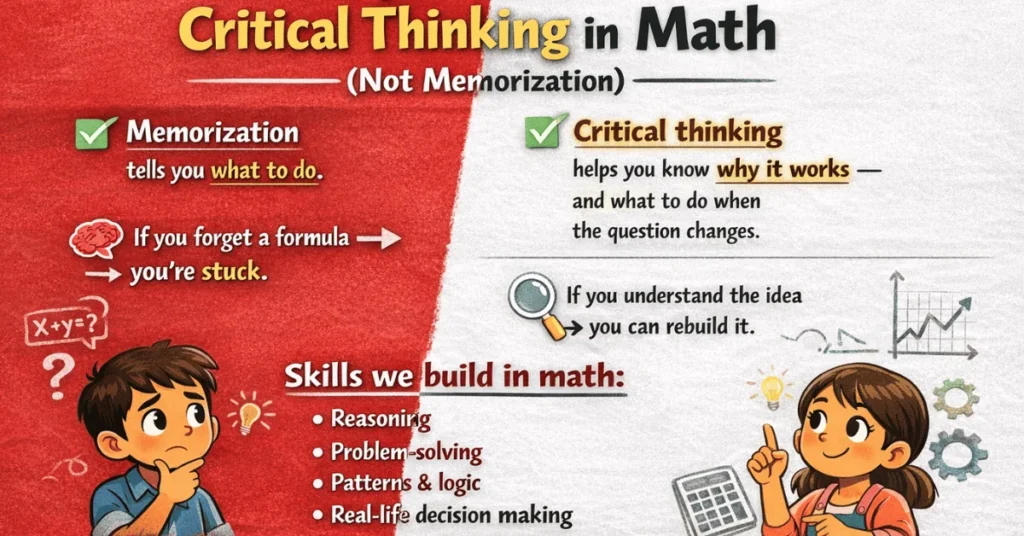
Many students can solve practice questions perfectly at home but suddenly struggle when the same concept appears differently on a test. This usually happens when mathematics has been learned through memorization instead of understanding.
Over the years, I’ve noticed that students who rely only on formulas often lose confidence the moment a question changes slightly. Meanwhile, students who understand the reasoning behind a method adapt far more easily, even when problems become unfamiliar.
This is why critical thinking matters so much in mathematics.
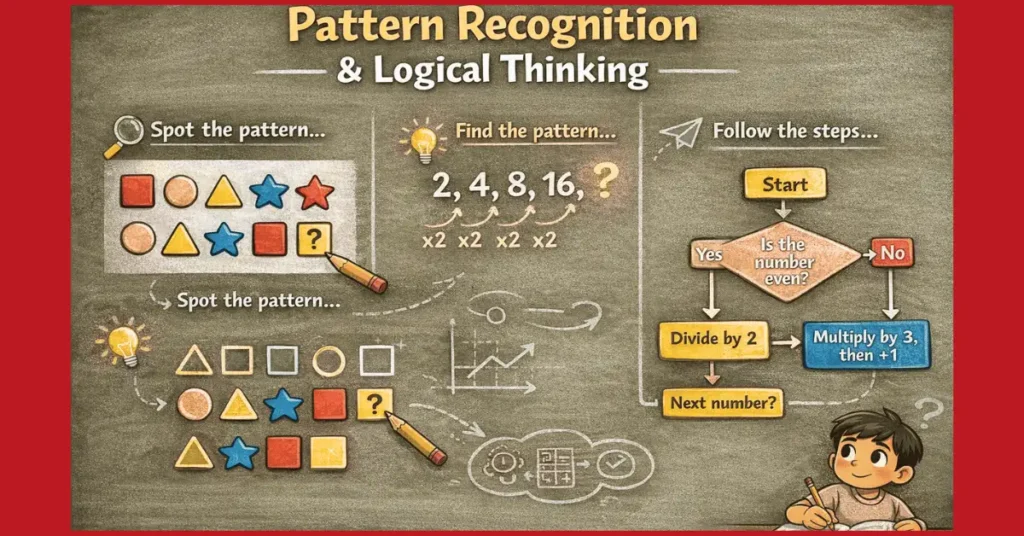
Math is not simply about remembering steps. It’s about recognizing patterns, making logical decisions, analyzing relationships, and understanding why a method works in the first place. These reasoning skills help students far beyond the classroom from interpreting statistics online to comparing prices, managing money, and solving everyday problems confidently.
At Numeric Wiz, we prioritise mathematical thinking because students build lasting confidence when they truly understand concepts instead of depending entirely on memorized procedures.
What Critical Thinking in Math Really Means
Critical thinking in mathematics is the ability to reason through problems instead of blindly following steps. It involves analyzing situations, identifying patterns, evaluating strategies, and applying concepts flexibly in unfamiliar situations.
Students who think mathematically do more than arrive at answers. They understand relationships between ideas and can explain why a solution works.
For example, I once worked with a student who had memorized the quadratic formula perfectly. However, during a word problem, the student became completely stuck because the question looked different from textbook examples. Once we slowed down and focused on understanding the relationships inside the problem, the student solved it confidently and retained the concept far longer afterward.
This difference highlights an important truth:
memorization may help students survive a test, but reasoning helps them handle new situations independently.
Why Memorization Alone Often Fails
Memorization can produce short-term success, especially when questions follow familiar patterns. The problem begins when students encounter slightly unfamiliar wording, real-life applications, or multi-step reasoning tasks.
One small change in a question is often enough to reveal whether a student truly understands a concept or simply remembers a procedure.
I’ve seen this happen repeatedly during exams. Students who depended entirely on fixed methods often froze under pressure because they were searching for a memorized template rather than thinking through the situation logically.
This creates several long-term problems:
| Memorization-Based Learning | Reasoning-Based Learning |
|---|---|
| Depends on fixed steps | Adapts to unfamiliar problems |
| Creates fear of mistakes | Encourages exploration |
| Weak long-term retention | Builds durable understanding |
| Focuses on speed | Focuses on understanding |
| Breaks under pressure | Strengthens confidence |
When students develop analytical thinking skills, mistakes stop feeling like failure. Instead, errors become opportunities to evaluate reasoning and improve understanding
How Critical Thinking Changes the Learning Process
One of the biggest changes I notice in reasoning-focused classrooms is the type of questions students begin asking.
Instead of:
- “What formula do I use?”
students start asking:
- “Why does this method work?”
- “Can this problem be solved another way?”
- “What changes if this value increases?”
These questions signal deeper conceptual understanding.
Students also become more comfortable slowing down and exploring multiple approaches. Interestingly, students who initially spend more time analyzing problems often solve advanced questions faster later because they understand the structure behind the mathematics.
In geometry, for example, students who reason carefully about angle relationships and shape properties often complete proofs more accurately than students trying to memorize sequences of steps.
Real-Life Situations Where Math Thinking Matters
Mathematical reasoning extends far beyond school assignments.
Students use these thinking skills constantly in everyday life:
- comparing discounts while shopping
- understanding loan interest
- interpreting graphs in news articles
- analyzing statistics online
- budgeting money
- evaluating risks and probabilities
I’ve seen students struggle with percentage discounts because they memorized formulas without understanding how percentages actually relate to quantities. Once they began reasoning through the relationships visually and conceptually, the calculations became much easier and more meaningful.
The same applies to interpreting data online. In today’s world, students regularly encounter graphs, trends, and statistics on social media and news platforms. Critical thinking helps them evaluate whether claims actually make sense instead of accepting numbers blindly.
| Everyday Situation | Thinking Skill Used |
|---|---|
| Shopping discounts | Percentage reasoning |
| Loan comparisons | Analytical thinking |
| News statistics | Data interpretation |
| Budget planning | Numerical reasoning |
What Happens When Students Don’t Develop Math Reasoning
When mathematics is taught entirely through repetition, students often develop fragile understanding. They may perform adequately on routine exercises yet struggle badly when concepts appear in unfamiliar formats later.
Over time, this can damage confidence.
Many students eventually begin saying things like:
“I’m just bad at math.”
In reality, the issue is often not ability but learning structure.
Students who never develop reasoning skills may:
- fear unfamiliar questions
- avoid challenging tasks
- depend heavily on memorization
- forget concepts quickly after exams
- struggle applying math in real life
I’ve worked with students who believed they were weak in mathematics for years. Once they began focusing on understanding patterns and relationships instead of memorizing isolated procedures, their confidence changed dramatically.
How Teachers and Parents Support Math Thinking at Home and School
Teachers and parents can boost critical thinking by asking the right questions and giving students space to reason. Supportive guidance helps children explain their thinking, explore alternatives, and develop deeper math reasoning, turning learning math into an interactive, thoughtful process.
1. Asking the Right Questions
I’ve noticed a big difference when adults ask, “How did you get this?” or “Is there another way?” These simple questions encourage students to articulate explanations and reflect on problem solving. It shifts the focus from just finding an answer to understanding concepts and procedures, helping children build strong reasoning habits.
2. Slowing Down the Process
Rushing through worksheets often blocks thinking. When I guide students to tackle fewer problems but spend more time analyzing each, they start spotting patterns and understanding relationships. Slowing down helps children internalize math teaching concepts and strengthens logical thinking.
At Numeric Wiz, we encourage students to explain their thinking step by step because understanding grows strongest when learners actively process ideas instead of passively copying methods.
| Weak Question | Strong Question |
| What’s the answer? | Why does this work? |
Research-Backed Reasons Schools Focus on Math Thinking
Schools focus on critical thinking in math because studies show students retain reasoning skills longer than memorized steps. Modern curriculums emphasize concept understanding over rote practice, helping learners apply problem solving strategies across subjects and real-life situations.
What Education Studies Show
Research consistently finds that students trained in critical thinking in math outperform those relying solely on memorization. Reasoning lasts longer, improves math confidence, and transfers to unfamiliar problems. For example, students who practice explaining steps and exploring alternatives retain skills months after lessons, while purely memorized formulas fade quickly.
Why Modern Curriculums Changed
Curriculums now prioritize concept focus and student comprehension. Educators aim to teach understanding rather than just procedures. In classrooms I’ve observed, students given reasoning-based tasks grasp patterns and relationships faster, ask better questions, and demonstrate higher engagement than those following repetitive exercises.
Does Critical Thinking in Math Improve Future Skills?
Critical thinking in math builds future skills by strengthening analytical thinking and problem solving abilities. Students learn to approach challenges with clear reasoning, which prepares them for careers, daily decisions, and real-life problem-solving beyond school.
Career and Life Benefits
I’ve seen students who practiced reasoning in math handle complex tasks more confidently later in life. Clear thinking and structured problem-solving translate into better decisions at work, smarter budgeting, and even interpreting data in news or business. These future skills come naturally when learning math emphasizes reasoning, not just memorization.
Building Confident Adults

Fear of numbers often blocks learning and growth. Students trained in critical thinking in math develop confidence, embrace challenges, and feel capable tackling new problems. I’ve guided learners who once doubted their abilities, and seeing them solve unfamiliar problems was a clear sign that lifelong learning was taking root.
Signs Your Child Is Memorizing Math Instead of Understanding It
A student may be relying too heavily on memorization if they:
- panic when a question is worded differently
- immediately ask which formula to use
- forget concepts shortly after exams
- struggle with word problems
- avoid unfamiliar questions
- cannot explain why a method works
I’ve seen many students appear successful during repetitive practice yet become completely stuck once a problem requires reasoning. This is often a sign that understanding has not fully developed.
Final Thoughts
The strongest math students are not always the fastest calculators or the best memorizers. Often, they are the students who pause, analyze, question, and reason carefully through problems.
When students understand why mathematics works, the subject becomes less intimidating and far more meaningful.
Critical thinking transforms mathematics from a subject focused on memorizing procedures into a tool for understanding the world logically and confidently.
And in the long run, that understanding matters far more than simply remembering formulas for a test.
Frequently Asked Questions
1. What is critical thinking in math?
Critical thinking in math is the ability to analyze problems, understand concepts, and reason through solutions instead of just memorizing steps. It helps students apply math reasoning, make connections, and solve unfamiliar problems with confidence.
2. How to develop critical thinking skills in math?
You can develop critical thinking skills in math by asking “why” questions, exploring multiple solutions, and learning from mistakes. Practice analyzing concepts, spotting patterns, and reasoning through real-life problem-solving situations to strengthen understanding.
3. How to improve critical thinking in math?
Improving critical thinking in math requires consistent practice: slow down while solving problems, discuss reasoning aloud, and compare multiple methods. Focus on understanding procedures, connecting concepts, and evaluating results instead of rushing to answers.
4. Why is critical thinking important in math?
Critical thinking in math is important because it builds flexible problem-solving, strengthens logical thinking, and improves retention. Students who think critically perform better in exams, apply knowledge in real life, and handle new challenges confidently.
5. How to teach critical thinking in math?
Teach critical thinking in math by encouraging students to ask questions like “How did you get this?” or “Is there another way?” Bring in real-life scenarios, take exercises step by step, and let students articulate their thought process.
6. What are the 9 critical thinking traits in math?
Key traits include analytical thinking, reasoning, evaluation, problem solving, curiosity, flexibility, attention to detail, pattern recognition, and persistence. Developing these helps students approach math concepts with confidence and deeper understanding.
Explore More Article: The Ultimate Resource for Worksheets: Catering to All Grades and Ages
Master Three-Digit Addition Easily: Step by step guide for addition