
What Is the Distributive Property? A Grade 6 Guide
The distributive property lets you multiply one number by a sum by multiplying it by each part first. For 3 × (4 + 5), you work out 3 × 4 and 3 × 5, then add: 12 + 15 is 27. I call it sharing the outside number out, because every term inside the brackets […]
Simplifying and Evaluating Algebraic Expressions: A Grade 6 Guide
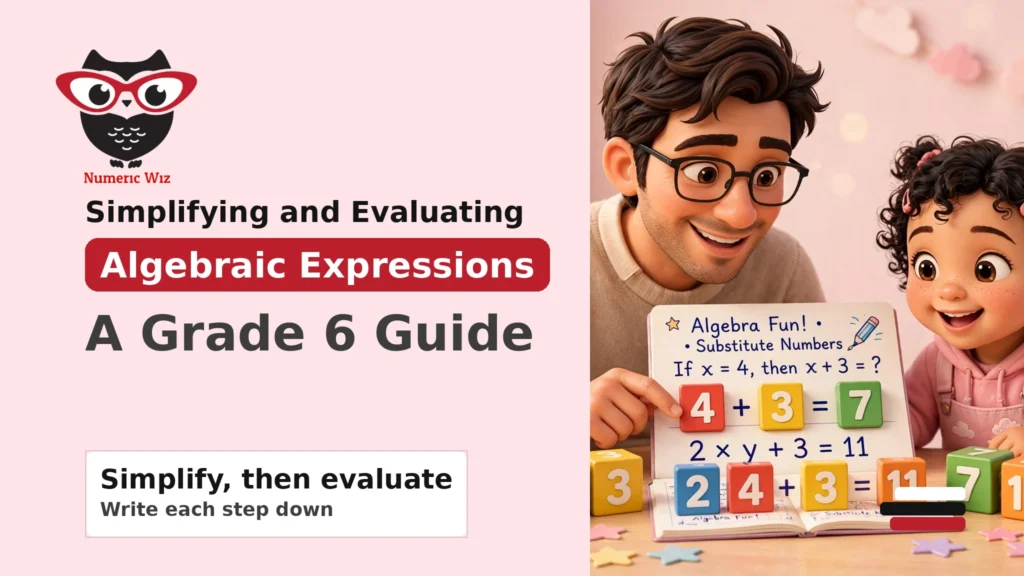
Simplifying an expression means rewriting it shorter, and evaluating means replacing each letter with a value and working out the number. Simplify first, then evaluate, and the arithmetic stays small. Most errors come from skipped steps, not hard sums. I once watched a boy substitute the first letter in an expression and forget the second […]
Adding and Subtracting Algebraic Expressions: A Grade 6 Guide
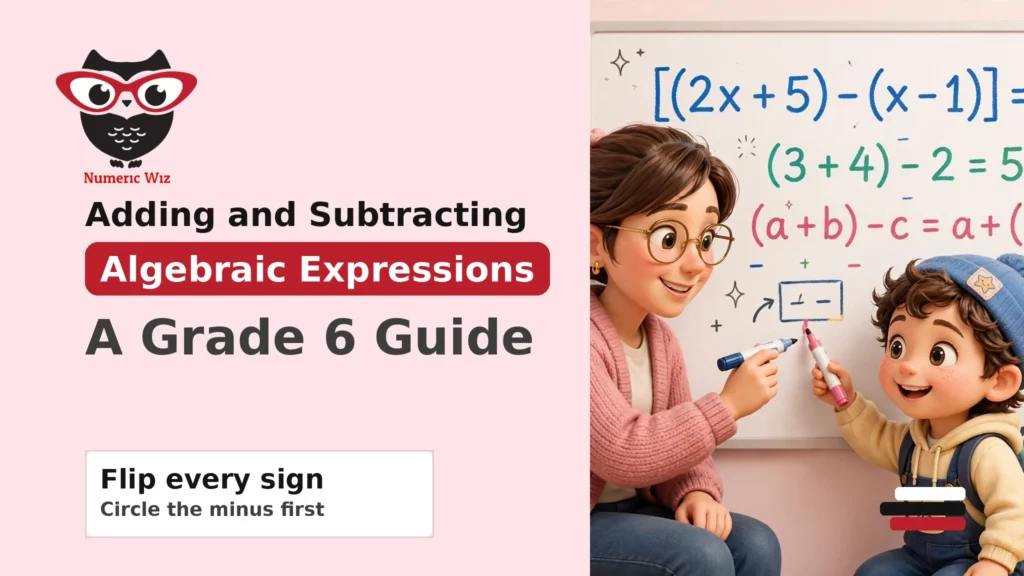
Adding and subtracting algebraic expressions means grouping like terms, then adding or subtracting their coefficients, while unlike terms stay put. The one hard part is a minus sign in front of a bracket, because it flips every sign inside. Learn that flip, and the rest is sorting. I once marked a page where a girl […]
Grouping Like Terms: A Grade 6 Guide
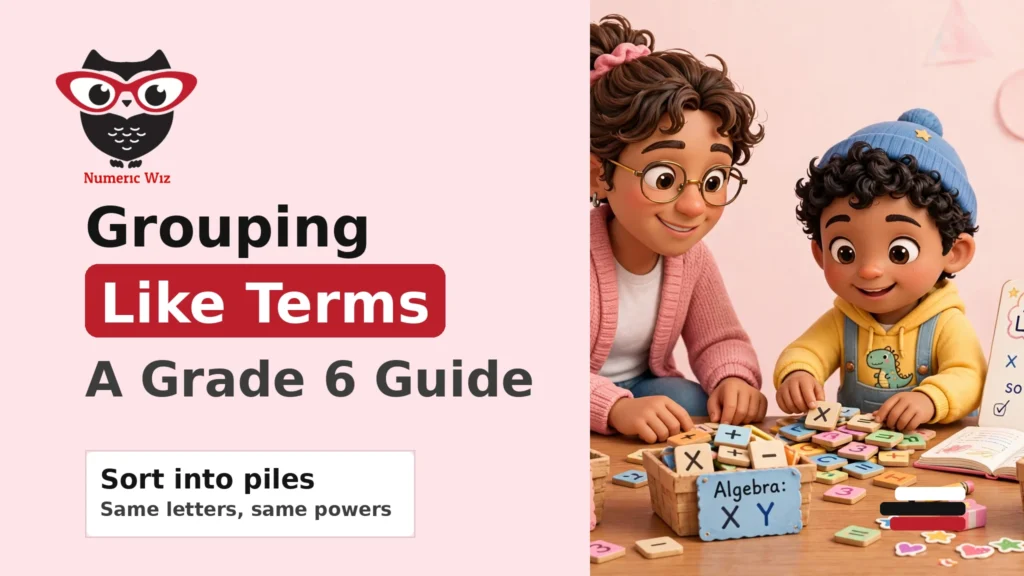
Grouping like terms means sorting an expression into matching piles, then adding or subtracting the numbers in front of each pile. Only terms with the same letters and the same powers can join. Once your child sees the piles, long expressions shrink fast. I once watched a boy add 3x and 2y and write 5xy […]
Algebra in Real Life: What Variables Actually Mean
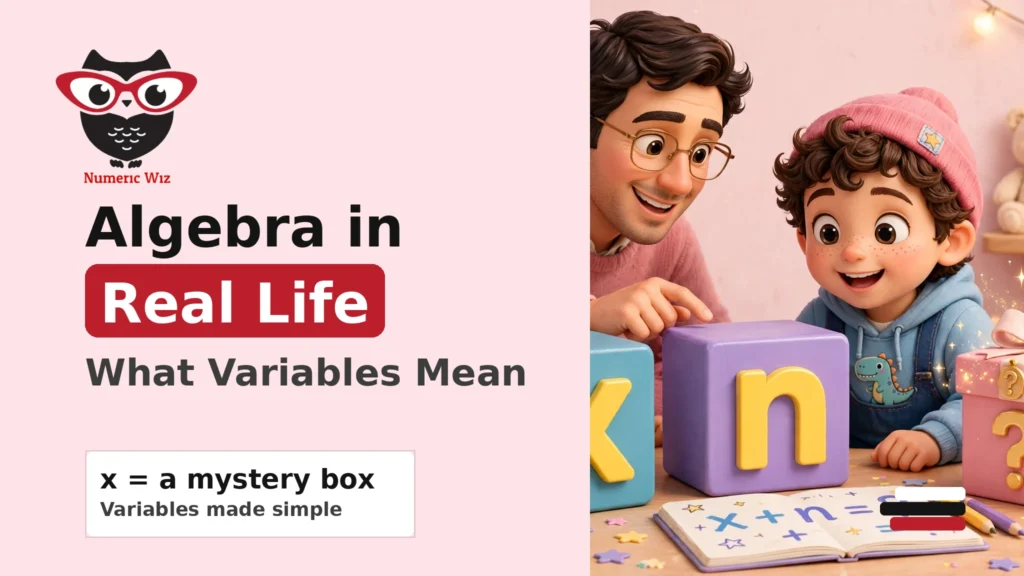
Algebra sounds hard, but a variable is just a box holding a number we do not know yet. That is the whole secret, and once a child sees it, algebra stops looking scary. I have taught Grade 6 math for over thirty years, and I start algebra with boxes, not with rules. A Variable Is […]