
Laws of Integers: A Grade 6 Guide
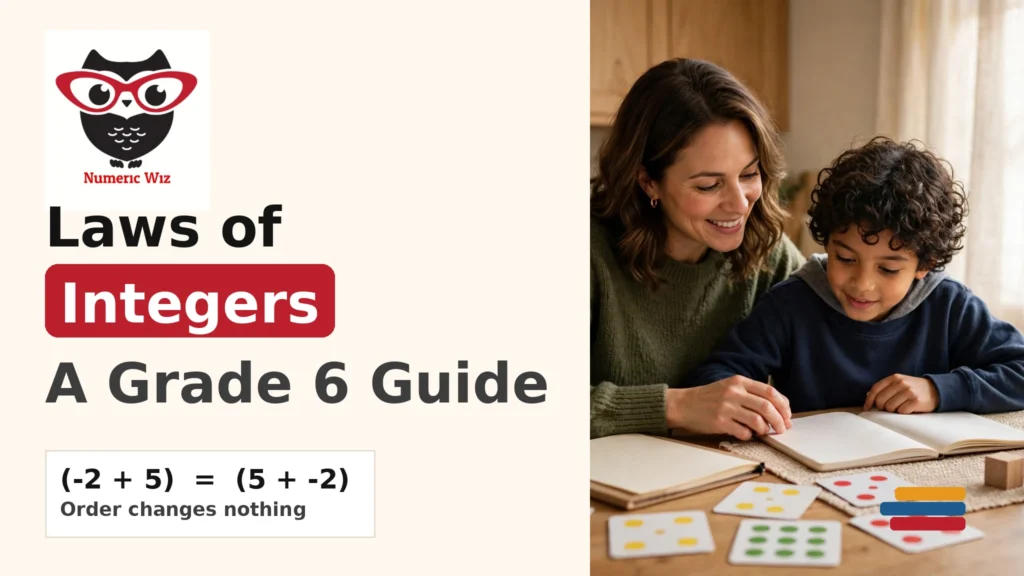
The laws of integers are three simple rules that let your child reorder and regroup numbers without changing the answer: the commutative law, the associative law and the distributive law. Once a child owns these three, long sums stop feeling long. I have taught Grade 6 math for over thirty years, and I introduce the […]
Integers on a Number Line: A Grade 6 Guide for Parents
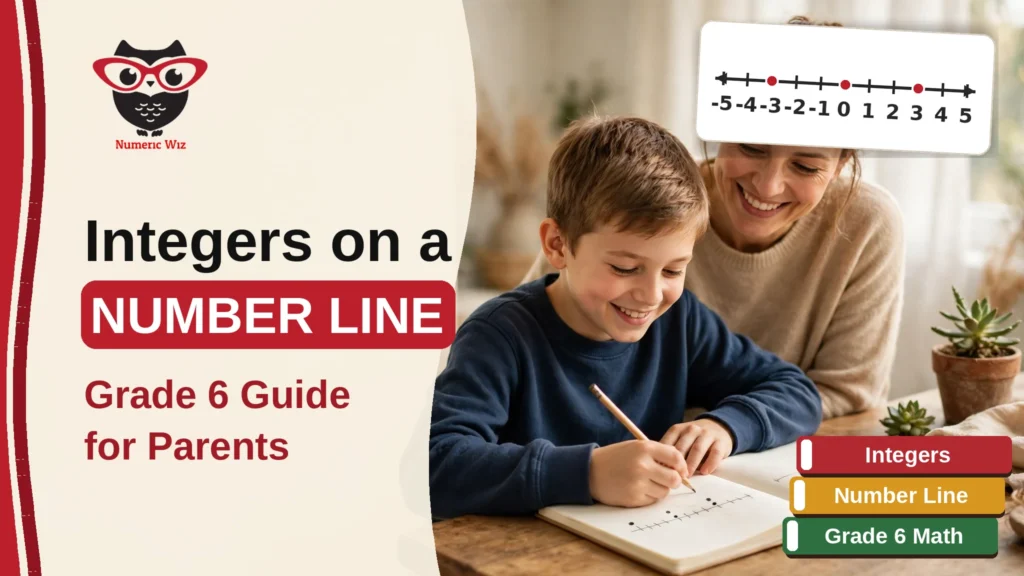
Integers sit on a number line in order, with zero in the middle, positive numbers to the right, and negative numbers to the left. You plot any integer by starting at zero and counting steps, right for positive numbers and left for negative ones. Once your child sees that picture, comparing and ordering integers gets […]
How to Compare and Order Integers: A Grade 6 Guide
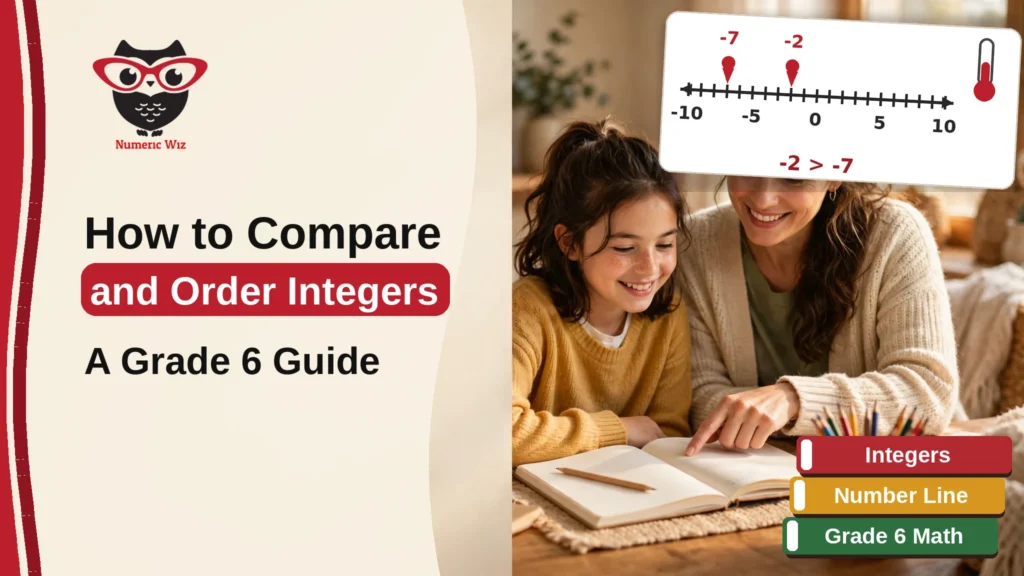
To compare and order integers, picture a number line. Numbers grow as you move right and shrink as you move left. Any positive integer beats any negative integer, and between two negatives, the one closer to zero is greater, so -2 > -7. Sort negatives first, then zero, then positives. I have taught Grade 6 […]
What Is Absolute Value? Simple Examples for Grade 6
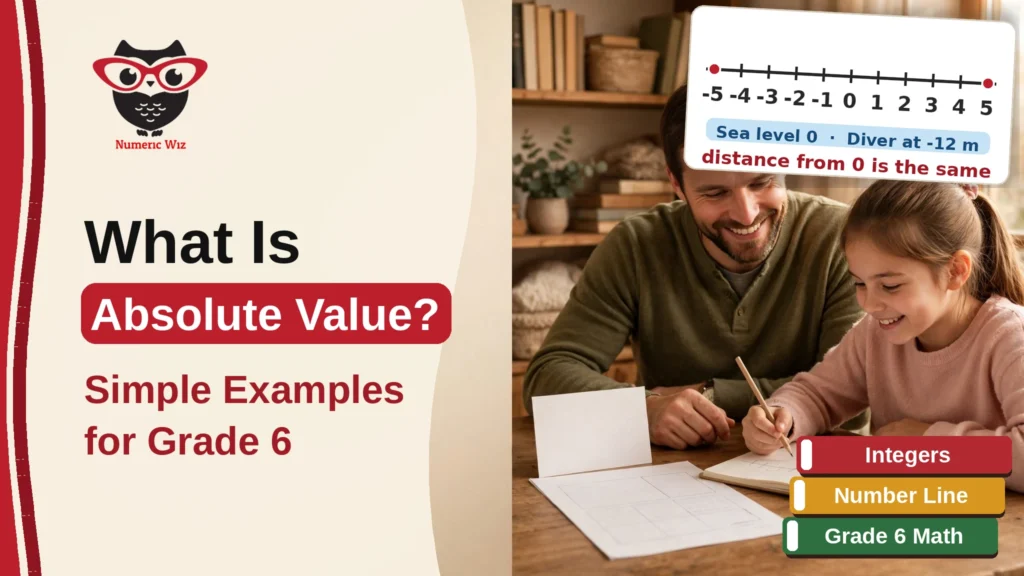
Absolute value means one plain thing: how far a number sits from zero. When your child writes |−7| = 7, she has it exactly right. The number −7 sits seven steps away from zero, and distance is all that absolute value ever measures. I have taught Grade 6 math for over thirty years, and this […]
Integers in Real Life: 10 Examples Every Grade 6 Student Should Know

Ask a class of eleven-year-olds what a negative number is for, and hands shoot up with the same honest question: “Miss, where do we ever use these in real life?” After more than thirty years of teaching mathematics, I can tell you that this question deserves a proper answer — not a rule from the […]