
Equivalent Ratios: A Grade 6 Guide
Equivalent ratios describe the same comparison with different numbers, like 2:3 and 8:12. You build one by multiplying or dividing both parts by the same number, never by adding. If both parts get the same treatment, the comparison stays fair, and that fair scaling is the whole skill. I once watched a girl scale a […]
What Is the Distributive Property? A Grade 6 Guide
The distributive property lets you multiply one number by a sum by multiplying it by each part first. For 3 × (4 + 5), you work out 3 × 4 and 3 × 5, then add: 12 + 15 is 27. I call it sharing the outside number out, because every term inside the brackets […]
Simplifying and Evaluating Algebraic Expressions: A Grade 6 Guide
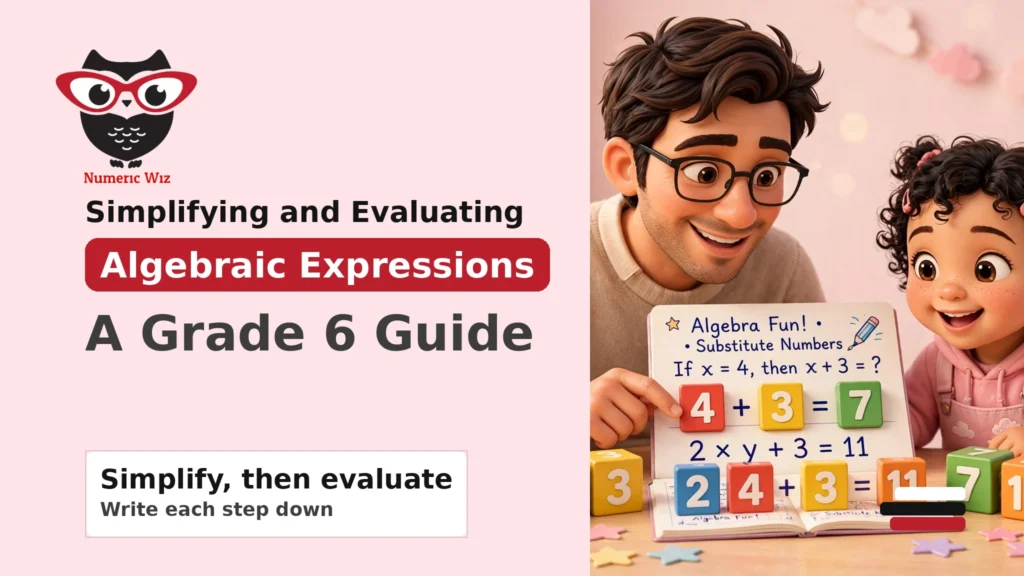
Simplifying an expression means rewriting it shorter, and evaluating means replacing each letter with a value and working out the number. Simplify first, then evaluate, and the arithmetic stays small. Most errors come from skipped steps, not hard sums. I once watched a boy substitute the first letter in an expression and forget the second […]
Adding and Subtracting Algebraic Expressions: A Grade 6 Guide
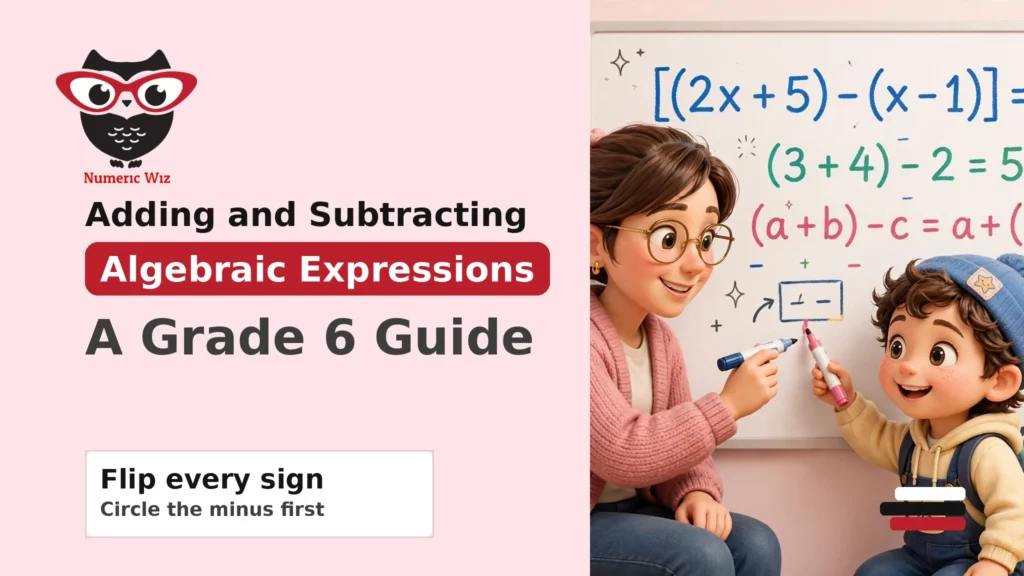
Adding and subtracting algebraic expressions means grouping like terms, then adding or subtracting their coefficients, while unlike terms stay put. The one hard part is a minus sign in front of a bracket, because it flips every sign inside. Learn that flip, and the rest is sorting. I once marked a page where a girl […]
Grouping Like Terms: A Grade 6 Guide
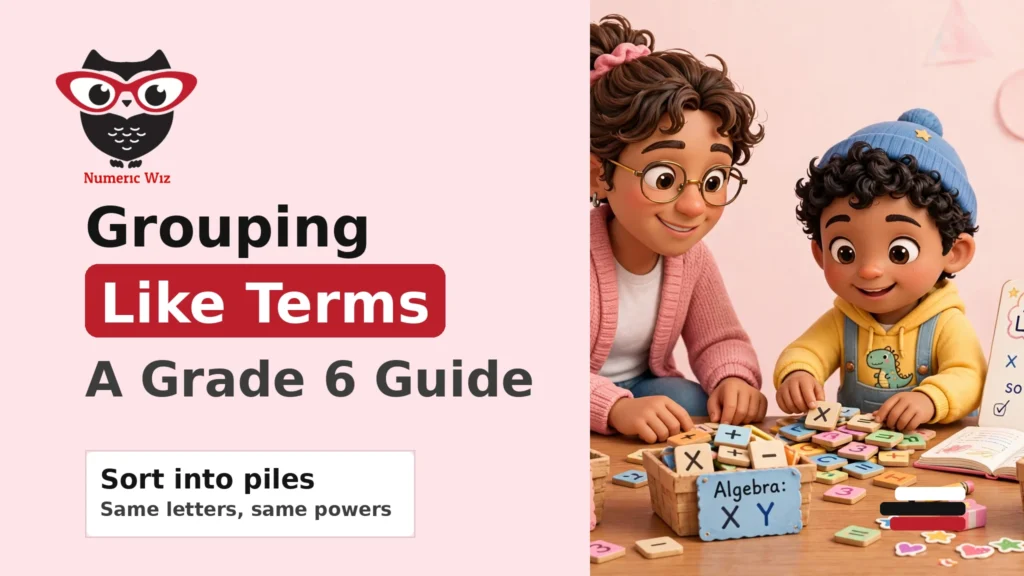
Grouping like terms means sorting an expression into matching piles, then adding or subtracting the numbers in front of each pile. Only terms with the same letters and the same powers can join. Once your child sees the piles, long expressions shrink fast. I once watched a boy add 3x and 2y and write 5xy […]
How Shapes Work in Real Life: The Geometry Around Your Home
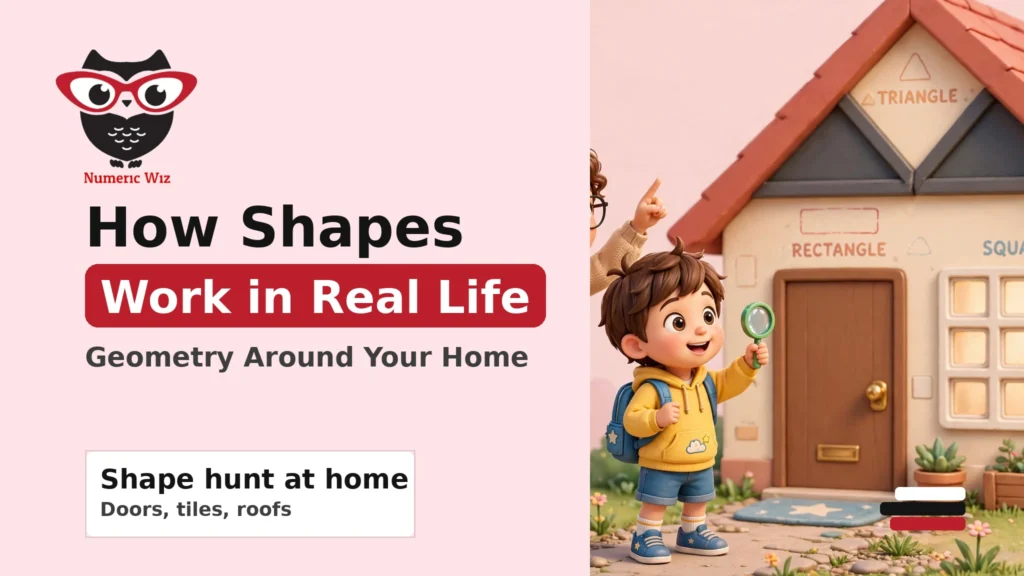
Shapes in your home are not just maths on paper: doors are rectangles, windows are squares or rectangles, tiles repeat in patterns, and roofs rise in triangles. Once your child names the shape, they start to see why it was chosen, and geometry turns into something they can touch. I ask children to count the […]
How Measurement Works in Real Life: Cooking, Rooms and Roads
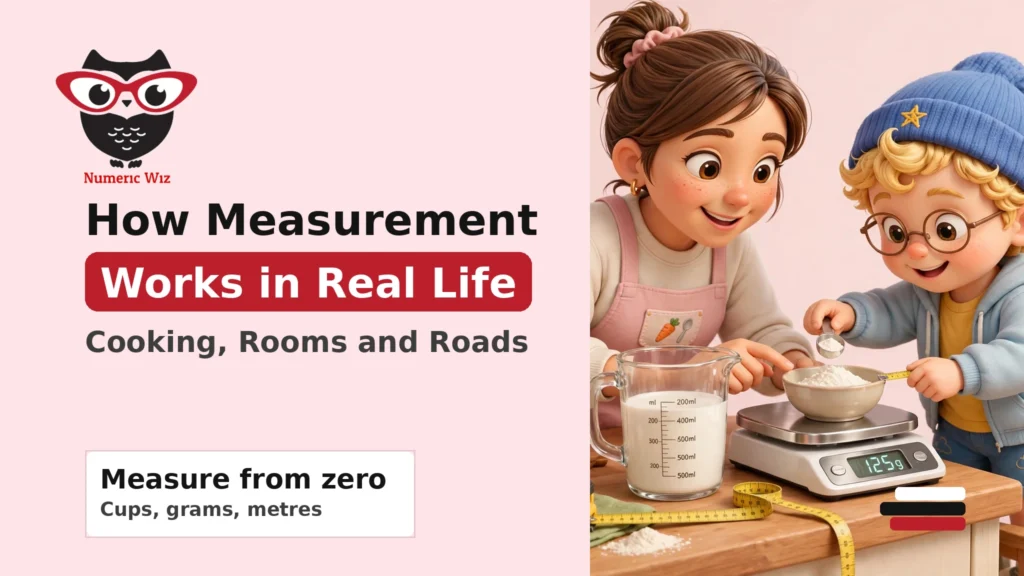
Measurement in real life means matching a number to a real thing: cups of flour in the kitchen, metres across a room, kilometres on the road. Pick the right unit, measure from zero, and read the mark honestly, and the number tells the truth. I once watched a child measure a table with a ruler […]
How Decimals Work in Money: What the Point Really Means
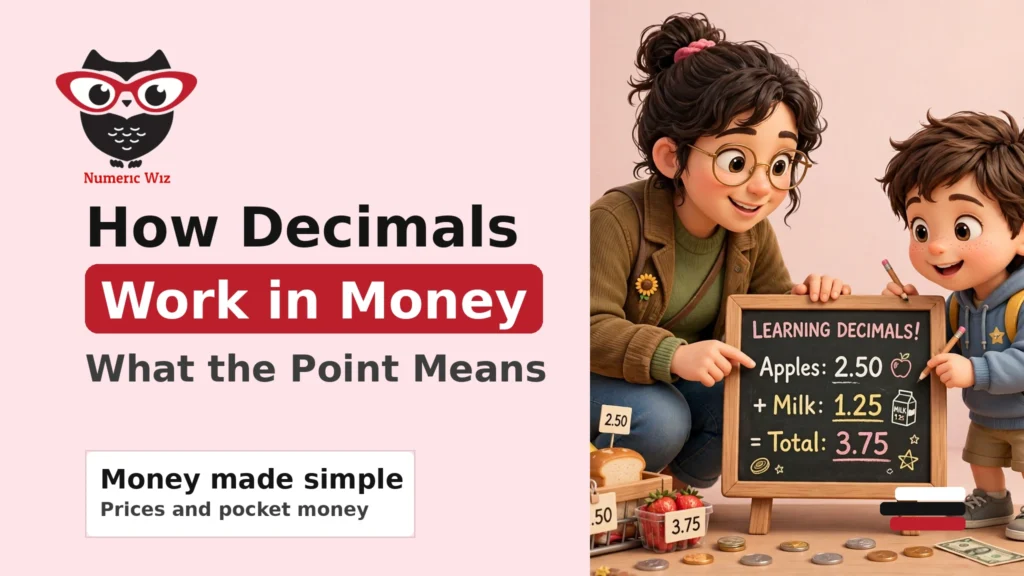
Decimals in money are just rupees and paisa written with a point between them. The digits before the point show whole rupees, and the digits after it show parts of one rupee. Once your child sees that, prices, bills and change all start to make sense. I have watched many children freeze at a shop […]
How to Learn Times Tables Fast
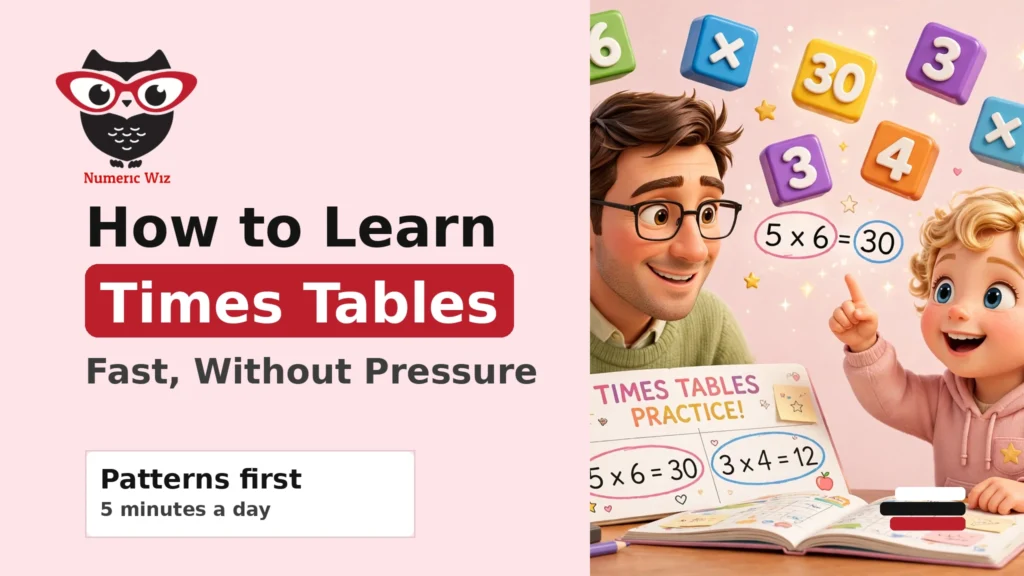
Times tables feel big, but fast does not mean rushed. Speed comes from patterns, not pressure, and a child who learns the patterns first answers faster than a child who just repeats rows. I have taught Grade 6 math for over thirty years, and I start every child with the easy patterns, then build up. […]
Algebra in Real Life: What Variables Actually Mean
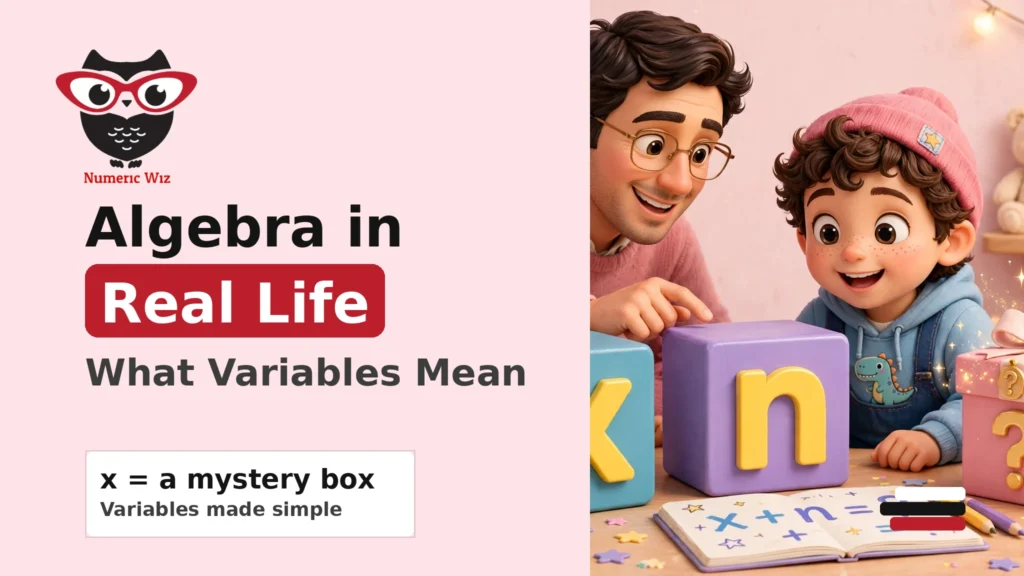
Algebra sounds hard, but a variable is just a box holding a number we do not know yet. That is the whole secret, and once a child sees it, algebra stops looking scary. I have taught Grade 6 math for over thirty years, and I start algebra with boxes, not with rules. A Variable Is […]