
How Decimals Work in Money: What the Point Really Means
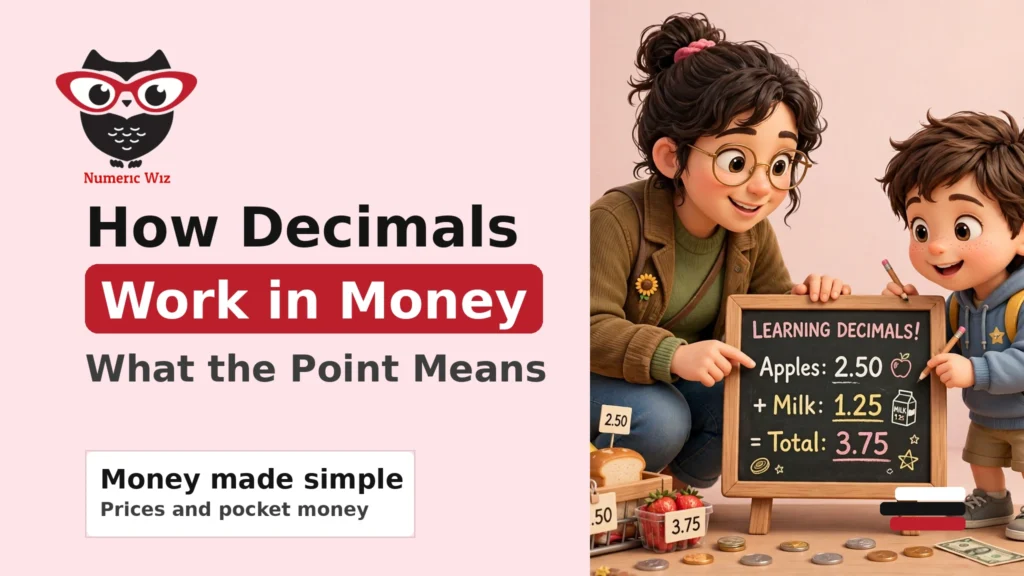
Decimals in money are just rupees and paisa written with a point between them. The digits before the point show whole rupees, and the digits after it show parts of one rupee. Once your child sees that, prices, bills and change all start to make sense. I have watched many children freeze at a shop […]
How to Learn Times Tables Fast
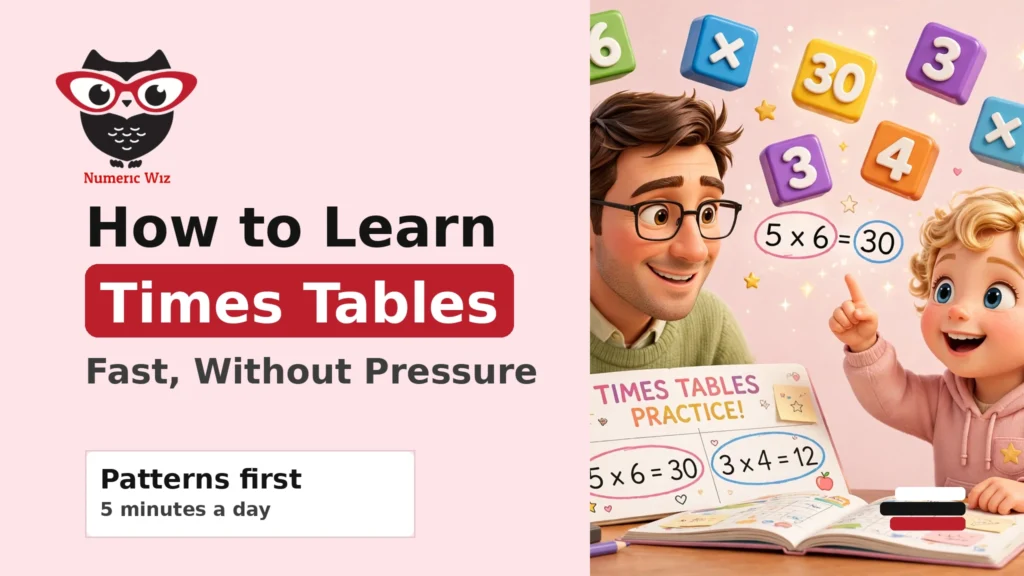
Times tables feel big, but fast does not mean rushed. Speed comes from patterns, not pressure, and a child who learns the patterns first answers faster than a child who just repeats rows. I have taught Grade 6 math for over thirty years, and I start every child with the easy patterns, then build up. […]
Algebra in Real Life: What Variables Actually Mean
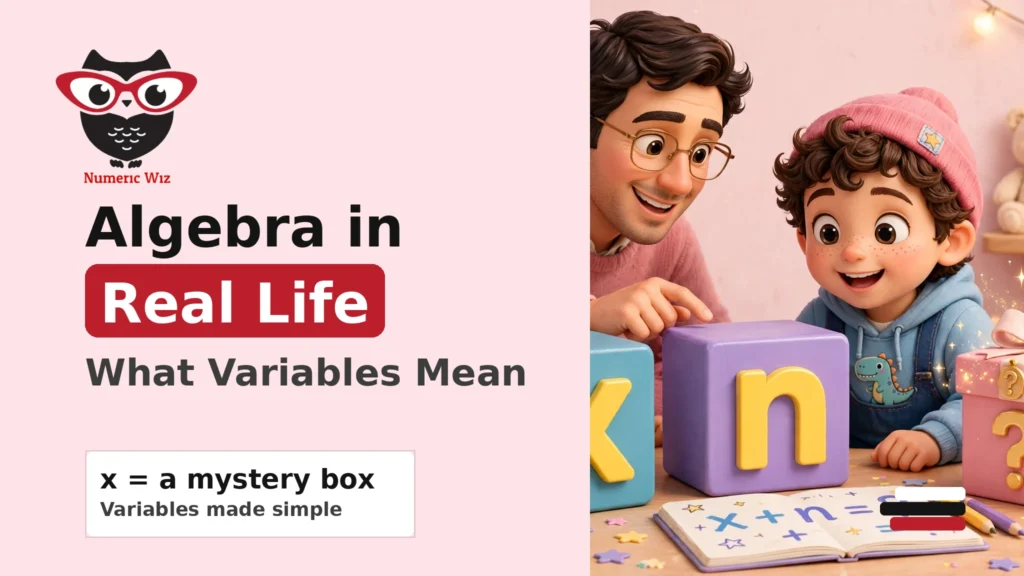
Algebra sounds hard, but a variable is just a box holding a number we do not know yet. That is the whole secret, and once a child sees it, algebra stops looking scary. I have taught Grade 6 math for over thirty years, and I start algebra with boxes, not with rules. A Variable Is […]
How to Solve Multi-Step Word Problems Without Fear
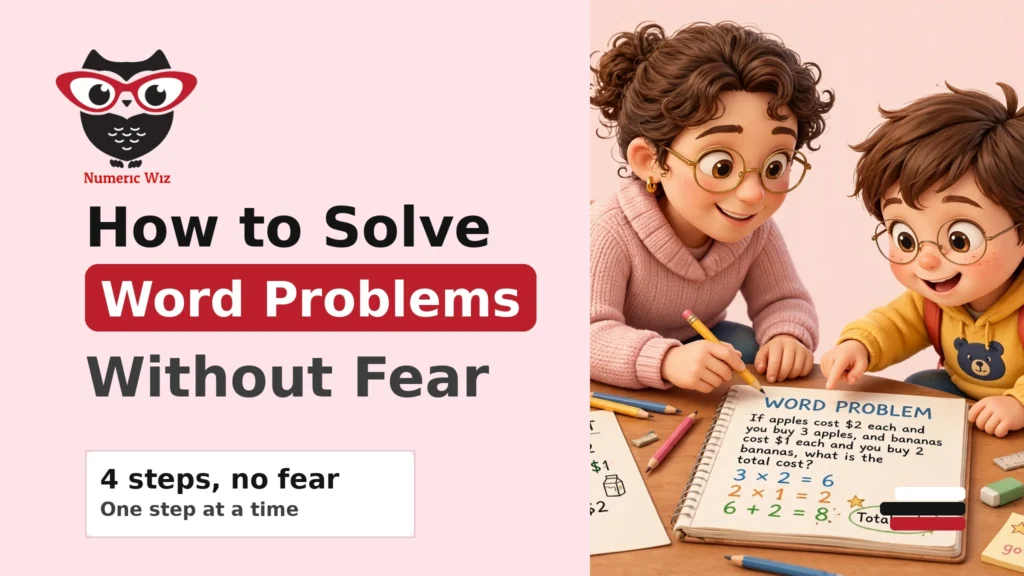
Multi-step word problems are just short stories that need two or more sums, and any child can solve them with one calm routine. The fear comes from not knowing where to start, not from the maths itself. I have taught Grade 6 math for over thirty years, and I use the same four steps every […]
Why Do We Learn Fractions? Real-Life Uses
Fractions run daily life, even when no one calls them fractions: half a recipe, a quarter of a dollar, and a third of a bill all split wholes into parts. A fraction names one part of a whole that splits into equal pieces, and once a child sees that, fractions stop feeling like schoolwork. I […]
How Percentages Work in Shopping: Discounts and Sale Prices

Percentages run shopping, and a child who can work out a discount in seconds never pays a label price blind. A percentage is a part out of 100, so a 25 percent discount takes 25 dollars off every 100 dollars of price. I have taught Grade 6 math for over thirty years, and I teach […]
How Ratios Work in Real Life: A Grade 6 Guide
Ratios compare two amounts, and they run daily life: cooking, shopping, maps, and travel all work on ratios. A ratio tells you how two amounts fit together, like 2 cups of flour for every 1 cup of sugar, or 1 centimetre on a map for every 10 kilometres outside. I have taught Grade 6 math […]
Mixed Review: Laws of Integers for Grade 6
Mixed review of the laws of integers means revising all three laws together, commutative, associative, and distributive, and learning to name the right law before solving each sum. If your child can name the law first, the sum itself rarely causes trouble. I have taught Grade 6 math for over thirty years, and I run […]
Set Notation: A Grade 6 Guide
Set notation is a short, clear way to write a group of things, and once your child learns its handful of symbols, whole pages of set questions start reading like plain sentences. A set is just a group of distinct things, and set notation is the shorthand we use to write that group down. I […]
Unit Rates: A Grade 6 Guide
A unit rate tells you the price, speed, or amount for one single unit, so you can compare two options fairly. If 4 notebooks cost 12 dollars, the unit rate is 3 dollars per notebook. That one number ends the guesswork at the shop shelf, on the road, and in the kitchen. I have taught […]