
Why Making Mistakes Helps Children Learn Math Better
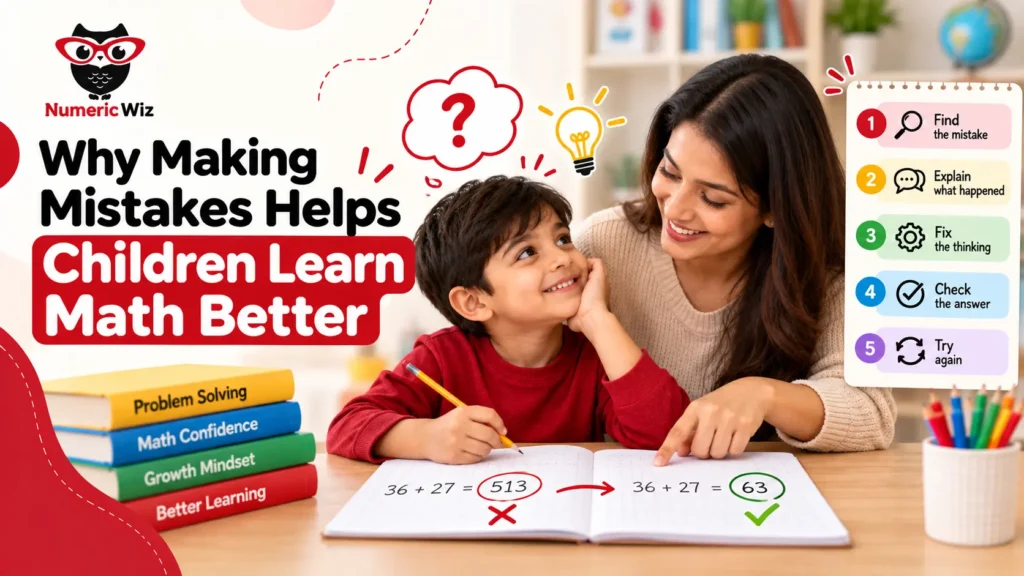
Your child writes: 36 + 27 = 513 Your first instinct may be: “No, that’s wrong. Try again.” But the wrong answer may tell you something the correct answer never could. Did your child misunderstand place value? Did they join the digits instead of adding the quantities? Did they forget a procedure? Or were they […]
Why Children Learn Math Better When They Discover Patterns Themselves
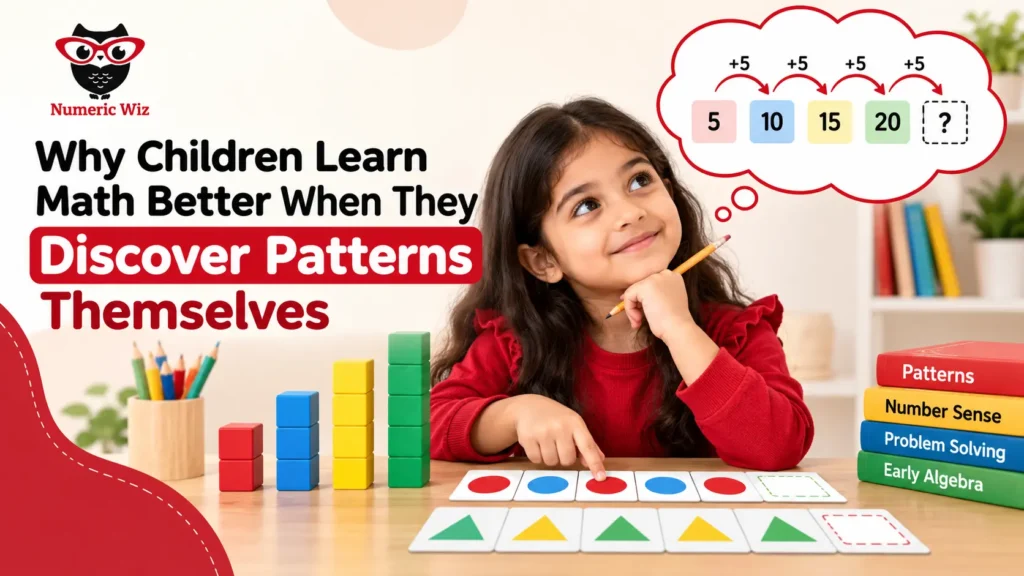
Have you ever watched a child solve five multiplication questions correctly, then freeze when the same idea appears in a slightly different problem? The child may know the steps but not yet see the mathematical relationship behind them. That difference matters. Children build stronger mathematical understanding when they learn to notice what changes, what stays […]
Why Number Sense Matters More Than Fast Calculation
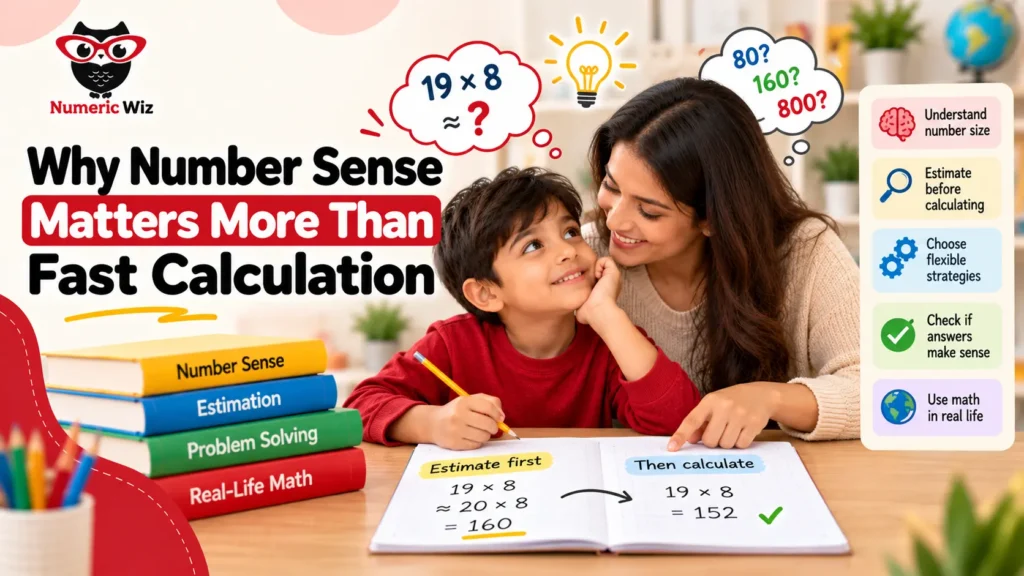
Your child answers 7 × 8 = 56 almost instantly. That looks impressive. But then you ask, “Is 19 × 8 closer to 80, 160, or 800?” and they hesitate. This difference matters. Fast calculation tells you how quickly a child can produce an answer. Strong number sense helps a child understand whether that answer […]
Multiples of Up to 2-Digit Numbers: Easy Guide with Examples
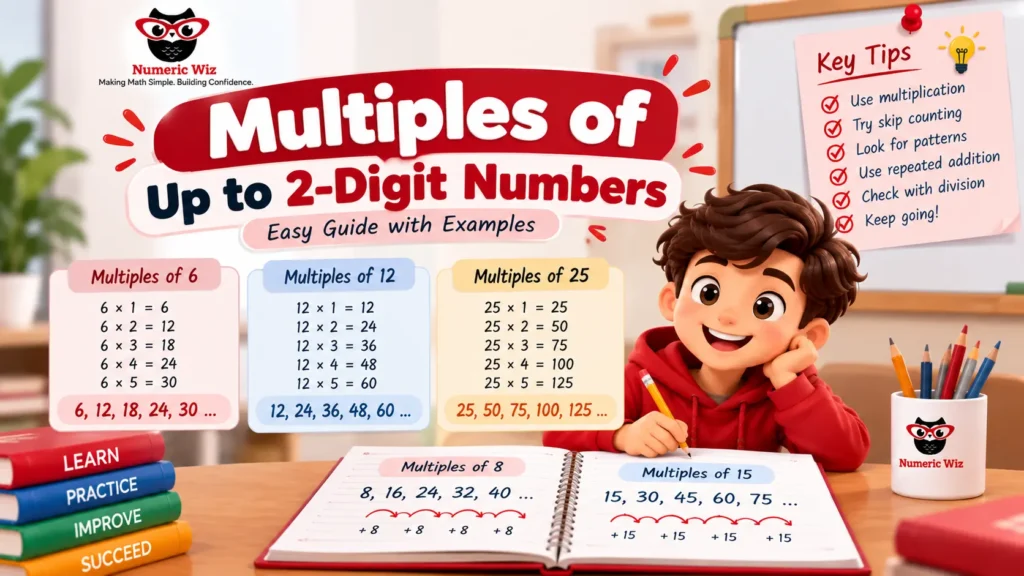
Understanding multiples of up to 2-digit numbers helps children see how multiplication creates patterns in numbers. Instead of memorizing long lists, students can learn how multiples are formed, how to find them quickly, and how they connect to multiplication tables, factors, common multiples, and real-life problems. For example, the first few multiples of 6 are: […]
Factors of Up to 3-Digit Numbers: Easy Guide with Examples
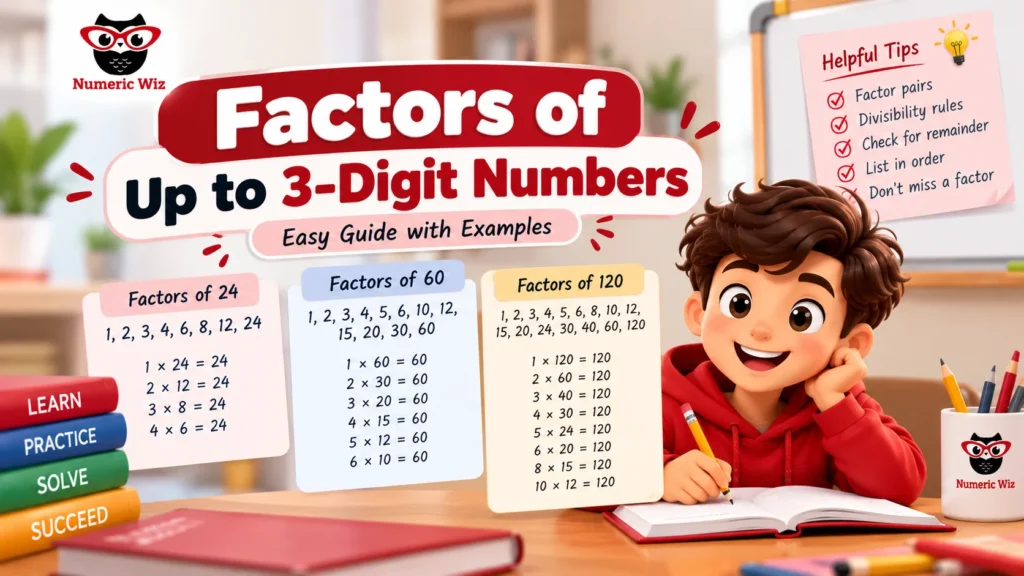
Finding the factors of up to 3-digit numbers becomes much easier when you understand one simple idea: a factor divides a number exactly, with no remainder. For example, 6 is a factor of 42 because: 42 ÷ 6 = 7 There is no remainder. So, both 6 and 7 are factors of 42. As numbers […]
Addition and Subtraction Within 20 and 100: Easy Strategies for Kids
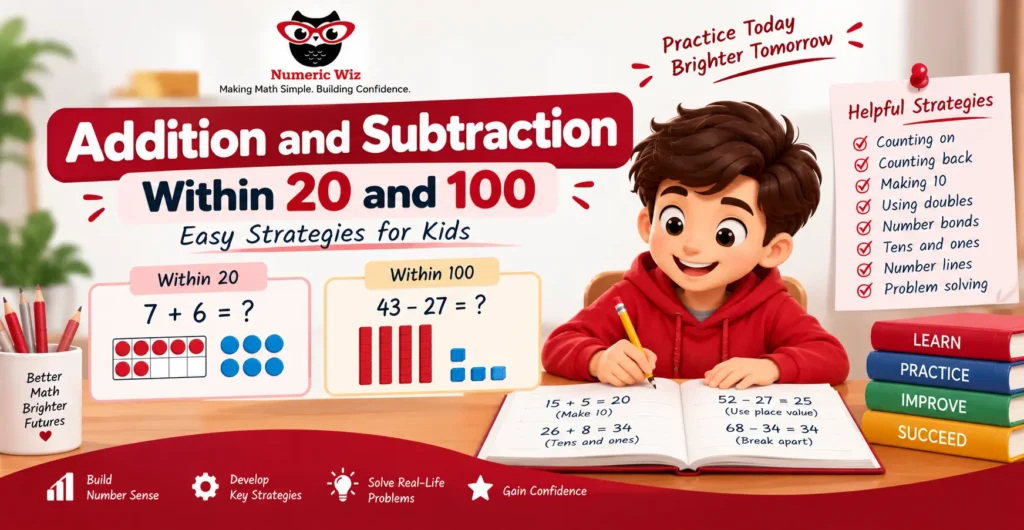
Your child can quickly solve 5 + 3, but when the problem changes to 8 + 7, the fingers come out. Then numbers get bigger, such as 34 + 28, and suddenly addition feels even more difficult. This does not always mean a child is weak at math. Often, the child is still relying on […]
Linear Equations for Grade 7: Easy Guide with Examples and Word Problems
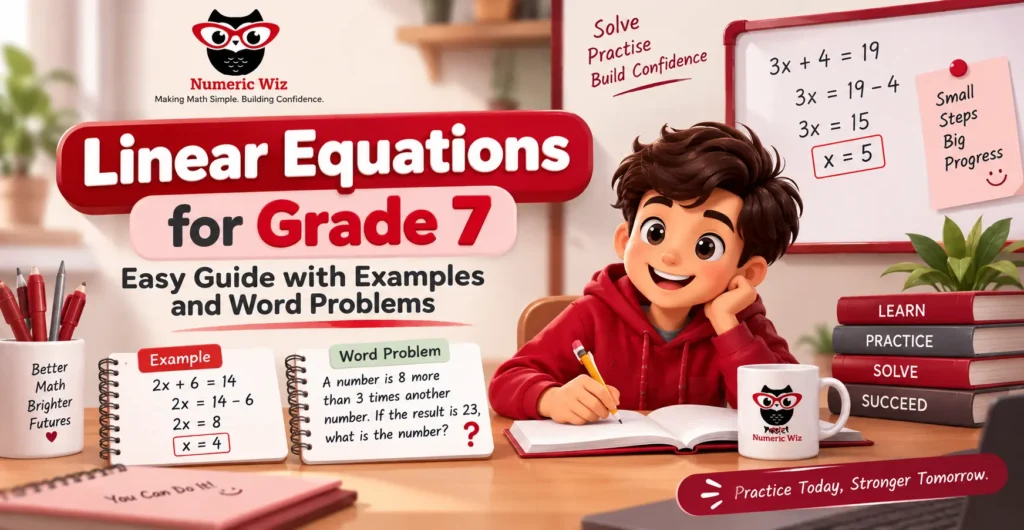
Learn linear equations for grade 7 in simple words. This original class 7 guide covers definitions, one-step and two-step methods, word problems, practice questions, and exam tips for 2027. Introduction Linear equations are an important topic in grade 7 mathematics. They help students find unknown numbers in a clear and balanced way. This skill is […]
How to Factor Polynomials: A Complete Step-by-Step Guide
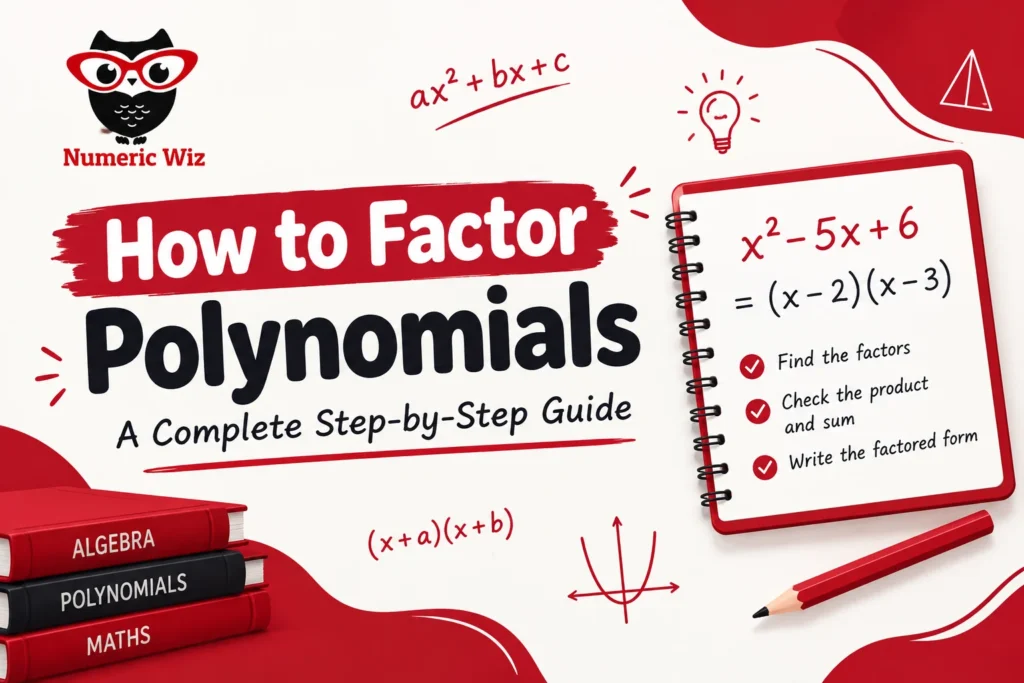
How to Factor Polynomials: A Complete Step-by-Step Guide Factoring polynomials means rewriting a polynomial as a product of simpler polynomials. Instead of leaving an expression like x² + 5x + 6, you recover (x + 2)(x + 3). That one skill unlocks a lot of algebra: solving equations, simplifying rational expressions, finding zeros of functions, […]
Zero Exponent Rule: What Is Any Number to the Power of Zero?
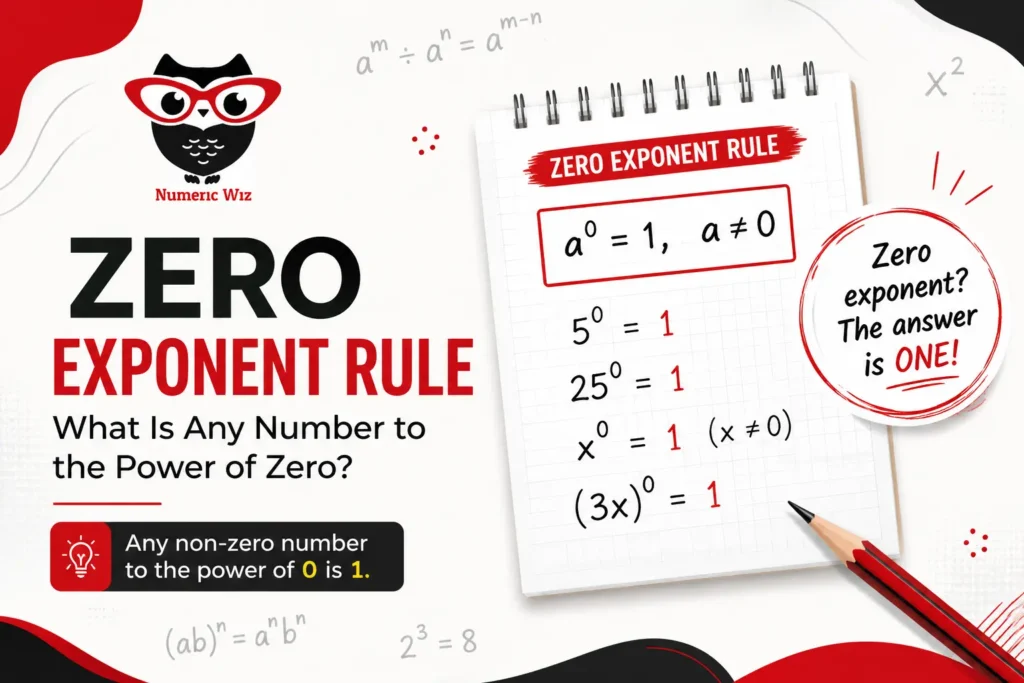
Have you ever wondered why a number raised to the power of zero becomes 1? At first, it can seem confusing. After all, we usually think of zero as meaning “nothing.” But exponents follow a specific pattern, and that pattern explains exactly why this works. The Zero Exponent Rule states: Anything except 0 to the […]
Quotient Rule of Exponents: Easy Explanation with Examples & Practice Questions
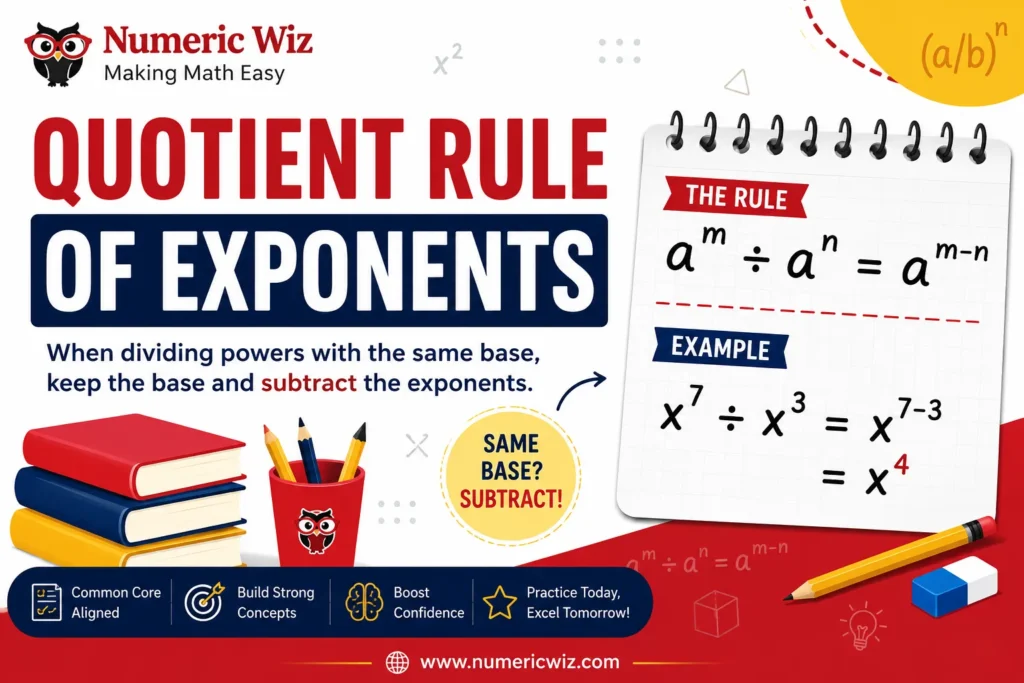
The Quotient Rule of Exponents says that when dividing powers with the same base, keep the base the same and subtract the exponents. For example, x⁷ ÷ x³ = x⁴ This works because four x’s remain after the common factors are cancelled. The rule only works when both expressions have the same base. Many students […]